
 EN
EN
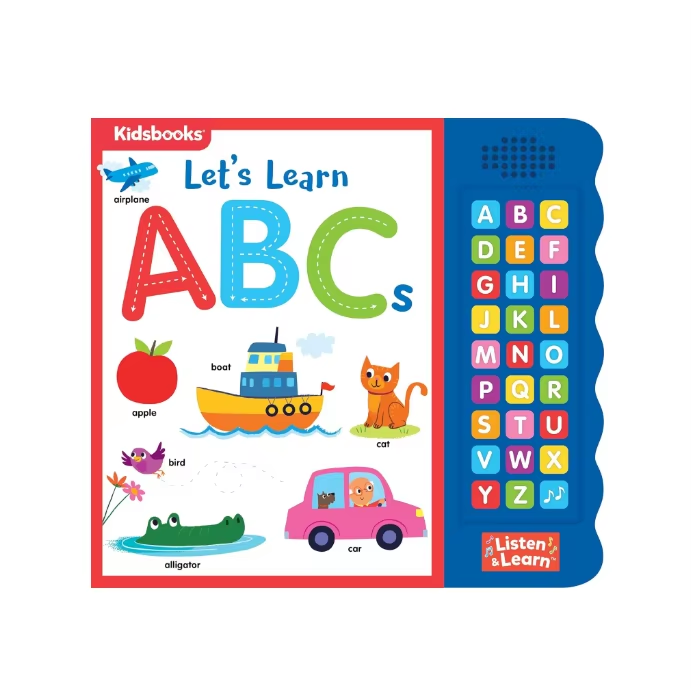
The Science Behind Sound Buttons and Visual-Motor Integration
Talking early education sound books leverage the brain’s natural affinity for multi-sensory processing to strengthen hand-eye coordination. When toddlers press a sound button, a sophisticated neural collaboration unfolds—linking visual perception with precise motor output.
How visual targeting of sound buttons triggers precise finger movement
When a toddler visually locates a button on a talking early education sound book, the occipital lobe processes the visual stimulus—such as a bright animal icon—and relays spatial coordinates to the motor cortex. The motor cortex then sends a command to the finger muscles, engaging the visual-motor integration (VMI) pathway. This deliberate targeting requires the brain to compute distance, direction, and force, turning a simple press into a micro-lesson in eye-hand coordination. Repeated exposure refines the accuracy and speed of these movements, as confirmed by improved fine motor scores in longitudinal assessments (Dance & Taylor, 2022).
Sensorimotor synchrony strengthens neural pathways between occipital and parietal lobes
Pressing a sound button and immediately hearing auditory feedback—like a cow “moo”—creates sensorimotor synchrony that reinforces connections between the occipital lobe (vision) and the parietal lobe (sensory integration and spatial reasoning). Multi-sensory input accelerates consolidation of these pathways, effectively wiring the brain for tighter hand-eye coordination. This temporal pairing—visual input → motor action → auditory output—triggers Hebbian learning, strengthening synaptic connections within the dorsal visual stream, which is essential for guiding actions through vision. As the Center on the Developing Child at Harvard University (2023) notes, such sensory-rich interactions build robust neural architecture, transforming a talking sound book into a potent tool for fine motor and cognitive development. Over time, this reduces the cognitive load required for simple targeting, supporting progression to more complex tasks.
Fine Motor Development Through Repeated Interaction with Talking Early Education Sound Books
Progression from palmar to pincer grasp during button pressing (18–36 months)
Pressing buttons on a talking early education sound book serves as a daily fine-motor workout. At 18 months, most children use a palmar grasp—smashing or raking large buttons with the whole hand. As the book’s layout encourages increasingly precise targeting, grip naturally evolves: by 24–30 months, children begin isolating the index finger or thumb; by age 3, the mature pincer grasp (thumb and forefinger) typically becomes the default. A longitudinal study in Developmental Psychobiology (2022) found toddlers who engaged in daily button-pressing activities mastered the pincer grasp an average of 1.5 months earlier than peers. This progression reflects more than button size—it reflects consistent demand for visual-guided reach, training the hand to shift from power-based to precision-based control and laying foundational motor skills for writing and self-feeding.
Role of tactile feedback and graded resistance in refining motor unit recruitment
Each button press delivers immediate tactile feedback—a soft click, subtle vibration, or textured surface—that confirms success and helps the brain calibrate force for subsequent presses. Many talking books incorporate varying resistance levels, requiring graded motor unit recruitment: light touches engage only a few slow-twitch fibers, while stiffer buttons demand greater force and activate more fast-twitch units. A 2023 study in Pediatric Motor Control found children practicing with graded-resistance buttons showed a 22% improvement in finger force modulation after eight weeks. This repeated, self-correcting practice sharpens the interplay between sensory feedback and motor output—enhancing dexterity and hand-eye coordination.
Design Principles That Maximize Hand-Eye Coordination in Talking Early Education Sound Books
Strategic button placement aligned with developmental visual attention patterns
Toddlers’ visual attention follows predictable developmental patterns that inform optimal button placement. Between 12–18 months, central, high-contrast targets are easiest to locate; by 24 months, expanded peripheral vision allows efficient detection of buttons near page edges. A 2023 developmental ergonomics study found that interactive books with clustered buttons in the central visual field improved first-touch accuracy by 27% in 18-month-olds. Leading manufacturers now position primary sound buttons within the macular zone—the area of sharpest visual focus—to align with this natural gaze pattern. This design minimizes frustration and reinforces intentional reach-and-press sequences, building hand-eye coordination without overtaxing limited attentional resources.
Multisensory cues (color, contrast, shape) that support intentional targeting
Multisensory cues transform static pages into navigable learning landscapes. High-contrast borders (e.g., black on yellow) increase visual salience, while distinct shapes—like raised stars or textured circles—offer tactile previews that guide the finger before full contact. A 2022 child–product interaction trial showed toddlers using sound books with color-coded, shape-differentiated buttons completed targeting tasks 35% faster than those using uniform buttons. These cues serve as anticipatory signals: the occipital lobe identifies the visual target, the parietal lobe maps the motor plan, and auditory feedback confirms success. When all three modalities align, repetition of intentional pressing strengthens sensorimotor loops—progressively refining the precision of hand-eye actions.
Balancing Engagement and Learning: Avoiding Passive Use of Talking Early Education Sound Books
The vibrant lights and catchy melodies of a talking early education sound book can easily captivate a toddler—but captivating attention is not the same as cultivating skill. A child fixated on a blinking light while ignoring core imagery is engaged in passive consumption, not active learning. This risks cognitive overload, where extraneous audio-visual stimuli overwhelm a young brain’s limited working memory and hinder the very hand-eye coordination the tool aims to develop. Effective use transforms the device from a reactive toy into a scaffold for exploration. The goal is to move beyond random button mashing—which merely reinforces cause-and-effect—toward intentional, goal-directed actions. Guiding a child to locate a specific picture and press its corresponding sound button shifts focus from the device itself to the cognitive-motor task. This intentionality improves fine motor accuracy and deepens neural links between visual identification and finger movement, ensuring engaging design serves authentic developmental purpose.
FAQ
Why are talking early education sound books beneficial for toddlers?
These books leverage multi-sensory interactions to improve hand-eye coordination, fine motor skills, and cognitive development by engaging visual, motor, and auditory pathways.
How do sound buttons help in developing fine motor skills?
Sound buttons encourage precise finger movements, progressing from palmar grasp to pincer grasp while refining motor unit recruitment and sensory feedback control.
What design features maximize learning in sound books?
High-contrast visuals, strategic button placement within the toddler’s attention field, and multisensory cues like texture and color enhance engagement and intentional targeting.
How can passive use of these books be avoided?
Parents and educators can guide children to focus on intentional tasks like matching images to sound buttons, ensuring active learning rather than random button pressing.
Table of Contents
- The Science Behind Sound Buttons and Visual-Motor Integration
- Fine Motor Development Through Repeated Interaction with Talking Early Education Sound Books
- Design Principles That Maximize Hand-Eye Coordination in Talking Early Education Sound Books
- Balancing Engagement and Learning: Avoiding Passive Use of Talking Early Education Sound Books
- FAQ