
 EN
EN
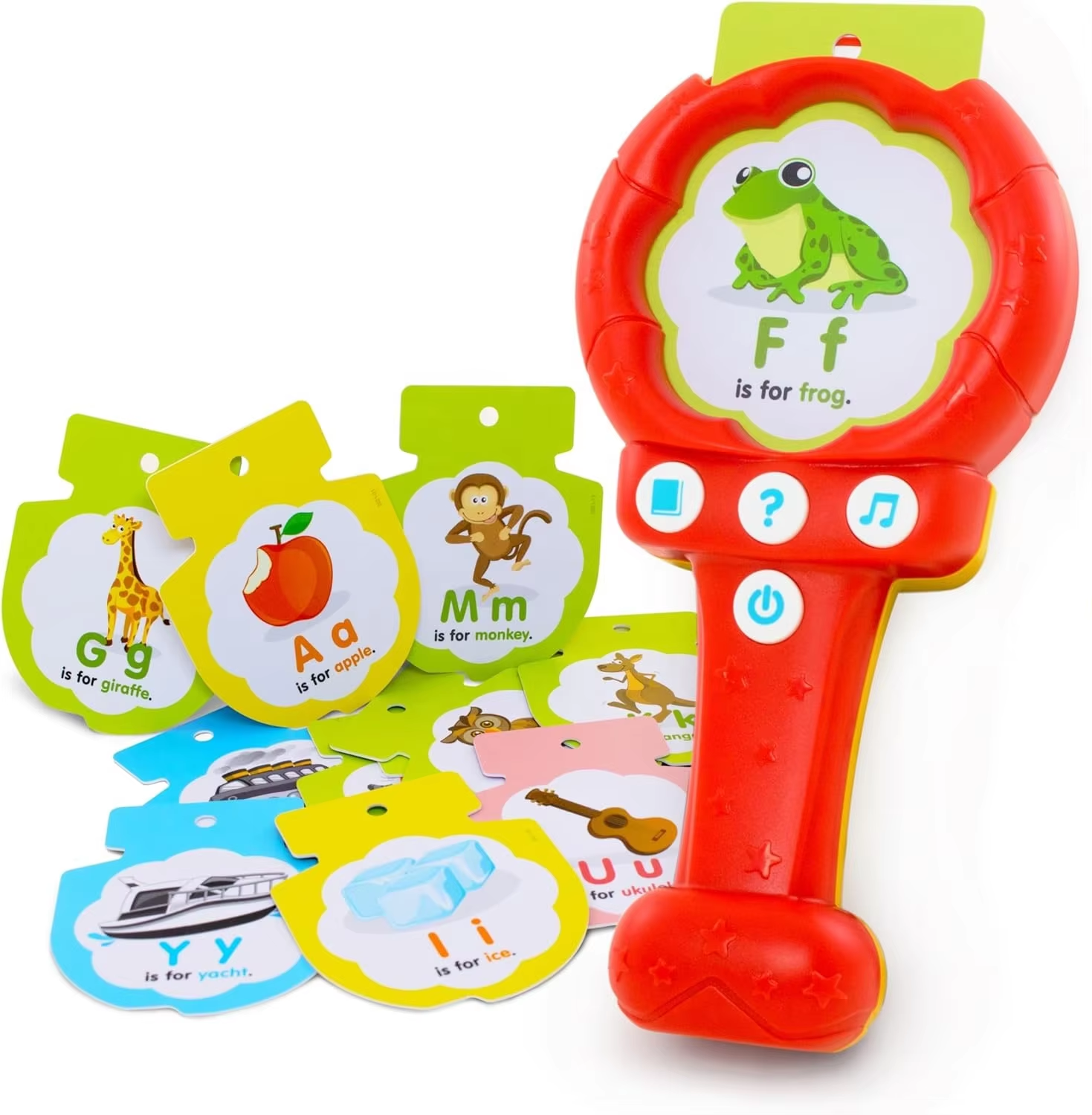
Why Smart Early Learning Toys Transform Developmental Outcomes
Neurodevelopmental Benefits: How Dual-Modality Play Strengthens Sensorimotor Integration and Prefrontal Cortex Maturation
Smart early learning toys that blend digital screens with tangible manipulatives unlock a unique neurodevelopmental advantage. When children drag a physical block across a playmat and see a corresponding character move on a tablet, their brains simultaneously process haptic and audiovisual feedback—strengthening sensorimotor integration, the coordination between sensory perception and motor action. A 2022 University of California study found preschoolers engaged in blended play showed 28% greater activation in the dorsolateral prefrontal cortex, a region critical for attention shifting and inhibitory control. Diffusion tensor imaging further revealed more efficient white-matter pathways forming between the cerebellum and parietal lobes—structural changes linked to faster, more fluid responses to novel stimuli.
Unlike passive screen time, active manipulation forces the brain to reconcile proprioceptive data with digital visual cues, accelerating maturation of neural loops that support self-regulation and working memory. Over time, this heightened sensorimotor coupling translates into better hand-eye coordination, more precise fine-motor control, and measurably longer attention spans. Because the prefrontal cortex remains highly plastic through age five, interactive challenges like these build the executive foundation essential for later academic success. By delivering immediate, multimodal feedback, smart toys convert play into a targeted neurological workout—one static toys cannot replicate.
The Critical 3–4 Year Window: Optimizing Language Acquisition and Executive Function Through Balanced Smart Early Learning Toys
The ages of three to four mark an explosive period for language development and executive function, when synaptic density peaks and experiences exert outsized influence on lifelong cognitive architecture. Smart early learning toys incorporating responsive speech recognition and adaptive storytelling can meaningfully amplify this sensitive window. A 2023 meta-analysis in Early Childhood Research Quarterly found children using interactive language toys for 20 minutes daily gained 45% more novel vocabulary words over six months than peers using traditional books alone.
The most effective tools balance digital responsiveness with physical engagement—for example, tracing letters on a tactile board while hearing phonetic sounds activates both the motor cortex and Broca’s area, reinforcing phonological memory. Similarly, hybrid digital-physical puzzles that require turn-taking, rule-following, and delayed gratification strengthen executive function: a 2021 University of Oxford longitudinal study showed four-year-olds using such toys demonstrated 33% better inhibitory control and 22% greater cognitive flexibility than those using screen-only apps.
Crucially, the strongest designs avoid over-automation. They preserve agency by requiring deliberate choices and offering scaffolding—not solutions—so children sustain ownership of their learning. When thoughtfully calibrated, smart early learning toys become catalysts for rapid neural integration, laying robust groundwork for reading, reasoning, and social interaction.
Design Principles for Effective Smart Early Learning Toys
From Passive Interaction to Active Agency: Embedding Intentional Control, Feedback, and Open-Ended Exploration
The most effective smart early learning toys shift children from passive consumption to active agency. Rather than watching animations, kids manipulate physical objects that trigger meaningful digital responses—embedding cause-and-effect reasoning at its core. This dual-modality play demands intentional control: children choose actions and observe direct consequences, reinforcing foundational cognitive logic.
Research confirms feedback must be immediate, clear, and supportive to sustain engagement (Kara & Çağıltay, 2020). When stacking blocks produces a corresponding sound, the action-response loop strengthens neural pathways. Advanced toys now use AI to adapt difficulty in real time, keeping challenges within the child’s zone of proximal development—a humanoid robot that recognizes objects and adjusts its teaching pace, for instance, significantly improved preschoolers’ concept recognition in controlled trials.
Beyond feedback, open-ended exploration—where no single answer exists—fosters creativity, iterative thinking, and resilience. Smart toys that let children rearrange coding blocks to compose unique melodies or stories encourage self-expression and normalize productive failure. These design principles transform smart toys from entertainment tools into genuine developmental partners—building cognitive, sensorimotor, and executive function skills through sustained, purposeful interaction.
STEM Learning in Action: Real-World Applications of Smart Early Learning Toys
Tangible Coding Blocks with Responsive Audio Feedback: A Montessori-Aligned Case Study in Blended Play
A leading early-education provider piloted wooden coding blocks that direct a small robot through a child-built maze. Each block represents a command—forward, left, right, or loop—and snaps onto a wooden board. Once the sequence is complete, the robot executes it while delivering cheerful, immediate audio feedback: “three steps forward, then turn!” This direct cause-and-effect loop supports the Montessori principle of self-correction without adult intervention.
Unlike screen-only coding apps, these physical blocks demand gross and fine motor engagement—reinforcing sensorimotor integration. Teachers observed that children who previously avoided trial-and-error became eager to debug sequences when the robot bumped a wall—a natural, low-stakes consequence. In an eight-week pilot, four-year-olds using these toys improved sequencing accuracy by 28% compared to a traditional puzzle group (Early STEM Lab, 2023). Tangible coding blocks thus make abstract algorithmic thinking accessible, hands-on, and auditory-rich—introducing foundational STEM concepts long before formal schooling begins.
When ‘Smart’ Undermines Scaffolding: Recognizing and Avoiding Premature Abstraction in Preschool STEM Play
For all their promise, smart early learning toys can short-circuit learning when digital guidance replaces the child’s own reasoning. When a toy immediately pronounces “Try the red block next!” before the child has explored options, it robs them of the productive struggle essential for building executive function. A 2022 observation study found preschoolers using over-prompted apps abandoned independent problem-solving 41% more often than children using unguided, hands-on materials (Palmér, 2022).
The solution lies in scaffolded, responsive feedback—hints that appear only after a pause, or audio cues that mirror the child’s action instead of directing it. Designers must prioritize open-ended physical play alongside digital interactivity, ensuring technology extends—not replaces—the child’s mental models. A coding robot that simply confirms a sequence without offering the answer preserves agency and keeps cognition actively engaged. Done well, smart early learning toys deepen STEM learning; done poorly, they dilute it with premature abstraction.
Emerging Trends and Responsible Innovation in Smart Early Learning Toys
The next generation of smart early learning toys is moving beyond simple digitization toward adaptive AI companions that respond to a child’s unique pace—and augmented reality (AR) features that overlay interactive narratives onto physical playsets. Equally important is the industry’s pivot toward responsible innovation: manufacturers are increasingly adopting biodegradable materials and energy-efficient components to meet rising consumer expectations for sustainability.
As these devices collect behavioral data, robust privacy safeguards and transparent data policies have become non-negotiable—ensuring developmental benefits aren’t overshadowed by safety risks. The central challenge remains design integrity: harnessing technology’s capacity for personalization and feedback while preserving ample unstructured, hands-on time. The goal isn’t smarter toys—it’s smarter support for the child’s developing mind. Keeping the child—not the algorithm—at the center of play is what makes innovation truly developmental.
FAQ
What are the main benefits of smart early learning toys?
Smart early learning toys strengthen sensorimotor integration, enhance executive functions, and support language development. They also foster creativity and problem-solving skills through interactive and multisensory experiences.
How do smart toys differ from traditional toys?
Smart toys blend digital technology with physical engagement, using responsive features like AI and augmented reality to provide real-time feedback, adapt difficulty, and encourage interactive learning.
Why is the age of 3–4 critical for using smart learning toys?
At ages 3–4, children's brains are highly plastic, making this a sensitive period for language acquisition and executive function development. Smart toys can amplify these gains by offering scaffolded, engaging experiences.
Are there downsides to smart early learning toys?
Over-automated toys can inhibit creativity and problem-solving by reducing the child’s chances to independently explore solutions. It’s essential for toys to provide responsive support without taking complete control.
What makes a good smart early learning toy?
Effective smart toys provide immediate feedback, balance physical and digital engagement, and allow open-ended exploration. They should foster agency and creativity rather than passive consumption.
How are sustainability and privacy addressed in smart toys?
Manufacturers are adopting eco-friendly materials and energy-efficient designs to address sustainability. Privacy concerns are being tackled through robust data protection measures and transparent policies.
Table of Contents
- Why Smart Early Learning Toys Transform Developmental Outcomes
- Design Principles for Effective Smart Early Learning Toys
- STEM Learning in Action: Real-World Applications of Smart Early Learning Toys
- Emerging Trends and Responsible Innovation in Smart Early Learning Toys
-
FAQ
- What are the main benefits of smart early learning toys?
- How do smart toys differ from traditional toys?
- Why is the age of 3–4 critical for using smart learning toys?
- Are there downsides to smart early learning toys?
- What makes a good smart early learning toy?
- How are sustainability and privacy addressed in smart toys?