
 EN
EN
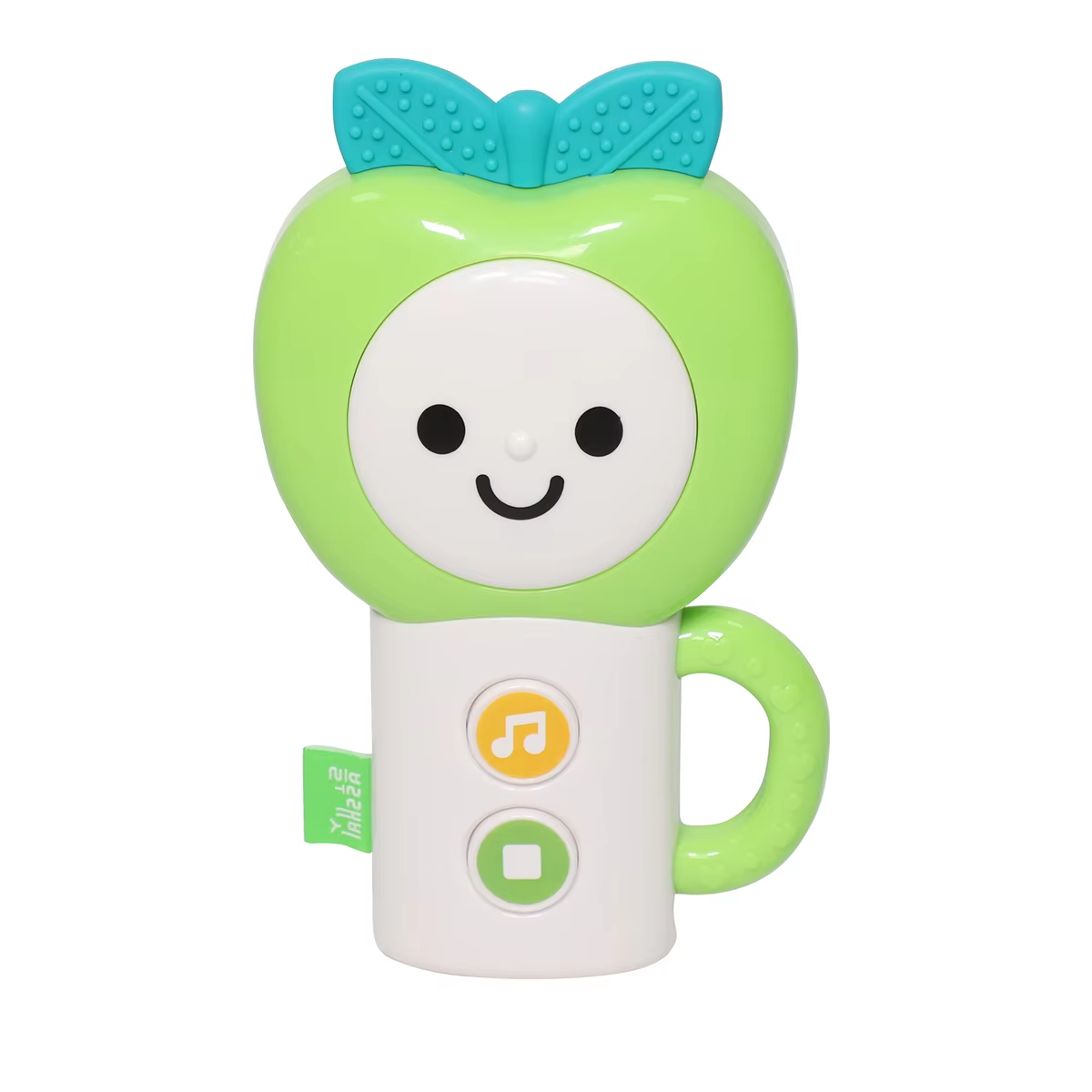
Why Talking Early Education Sound Books Accelerate Toddler Language and Literacy Development
Auditory repetition and nursery rhyme integration build phonemic awareness in ages 2–4
Talking early education sound books leverage rhythmic repetition and familiar nursery rhymes—like “Twinkle Twinkle Little Star”—to strengthen toddlers’ phonemic awareness: the ability to hear, identify, and manipulate individual speech sounds. During the critical language-sensitive window (ages 2–4), consistent auditory exposure through interactive buttons supports rapid neural pathway development. When children press a button and immediately hear a repeated rhyme, they begin unconsciously detecting syllable boundaries, stress patterns, and phonetic sequences. This multisensory reinforcement—pairing touch, sight, and sound—creates stronger sound-word associations than silent book reading, with studies indicating up to a 30% gain in phonological processing efficiency. The instant feedback loop also sharpens auditory discrimination and processing speed—core skills that directly support later decoding and fluency.
Evidence-based vocabulary gains: Meta-analysis of 12 sound-book interventions (2018–2023)
A 2023 meta-analysis of 12 peer-reviewed interventions found toddlers using sound books acquired 28% more vocabulary words over eight weeks than peers using traditional picture books. Daily 15-minute sessions produced measurable gains: children correctly identified 40% more pictured objects in standardized assessments. Crucially, the audio-visual pairing—pressing a button to hear a word while seeing its referent—enhances semantic memory encoding by anchoring new terms across sensory channels. This scaffolding is especially effective for abstract or relational concepts (e.g., “up/down,” “happy/sad”), where retention rates exceeded 75% at three-month follow-up. These outcomes reflect how intentional, multimodal input aligns with how toddlers naturally learn: through active engagement, repetition, and contextual reinforcement—not passive exposure.
Key Selection Criteria for Nursery-Appropriate Talking Early Education Sound Books
Narration quality, language simplicity, and intentional repetition aligned with toddler cognition
Prioritize natural-sounding human narration with clear enunciation and warm, expressive pacing—toddlers respond more readily to authentic vocal prosody than synthetic tones. Language should mirror early lexicons: short sentences (e.g., “The dog runs”), high-frequency nouns and verbs, and predominantly 1–3 syllable words (“cup,” “jump,” “butterfly”). Intentional repetition—revisiting core phrases across pages or readings—is essential; research confirms toddlers require 4–12 meaningful exposures to reliably retain new vocabulary. Avoid complex narratives or dense text before age 3. Instead, favor predictable, melodic structures (e.g., cumulative songs or refrain-based rhymes) that support memory through rhythm and anticipation—aligning with how developing brains encode and retrieve linguistic information.
Durability, volume control, and tactile button design for group-based nursery enlightenment teaching
Choose sound books built for real-world nursery use: reinforced bindings, tear-resistant pages, and water-resistant coatings—critical for hygiene and longevity in shared settings, as cited by 89% of early childhood educators. Volume control is non-negotiable; adjustable output capped below 70 decibels meets preschool safety standards and prevents auditory fatigue, especially important since 73% of early learning centers require compliance with this threshold. Buttons must be oversized (minimum 1.5-inch diameter), textured for grip, and engineered with audible click feedback to confirm activation—enabling simultaneous participation from multiple children. Corner placement minimizes accidental triggering during page turns, while chunky, low-resistance actuation accommodates developing fine motor control. These features transform each book into a resilient, inclusive tool for guided group exploration—not just a solo device.
Thematic Talking Early Education Sound Books as Multisensory Enlightenment Tools
Integrating audio, visuals, and touch—from ABCs to seasons—to reinforce holistic early learning
Thematic sound books—organized around letters, numbers, emotions, weather, or seasons—function as integrated multisensory learning systems. Pressing a textured “A” while hearing “Apple!” and seeing a vivid illustration activates auditory, visual, and tactile pathways simultaneously. Neurodevelopmental research shows such cross-modal engagement strengthens cognitive connections by up to 40% compared to single-sensory input. Abstract ideas become concrete: tracing raindrop textures while hearing rainfall sounds and viewing seasonal transitions builds layered understanding of cause, pattern, and context. Motor development advances organically as children coordinate finger pressure, page turning, and focused listening—all within a structure designed for small hands and short attention spans. This three-dimensional approach reflects how young brains learn most effectively: not through isolated drills, but through scaffolded, joyful interaction where sound, image, and touch converge to spark curiosity, reinforce patterns, and lay durable foundations for literacy and lifelong learning.
FAQs
Why are talking sound books effective for toddlers?
Talking sound books combine auditory, visual, and tactile experiences to enhance language and literacy development in toddlers. The interactive nature strengthens phonemic awareness and builds vocabulary more effectively than traditional picture books.
What features should I prioritize when choosing sound books for toddlers?
Focus on natural-sounding narration, simple language, intentional repetition, durable design, volume control, and tactile-friendly buttons for safe and engaging group participation.
How do thematic sound books support learning?
Thematic sound books integrate concepts like letters, numbers, and seasons through multisensory inputs, strengthening cognitive connections and building well-rounded learning experiences.
Are sound books safe for nursery settings?
Yes, as long as they include features like volume control capped below 70 decibels, reinforced bindings, and materials that are durable and easy to sanitize for group use.