 EN
EN
What Is an Interactive Point-and-Read Picture Book?
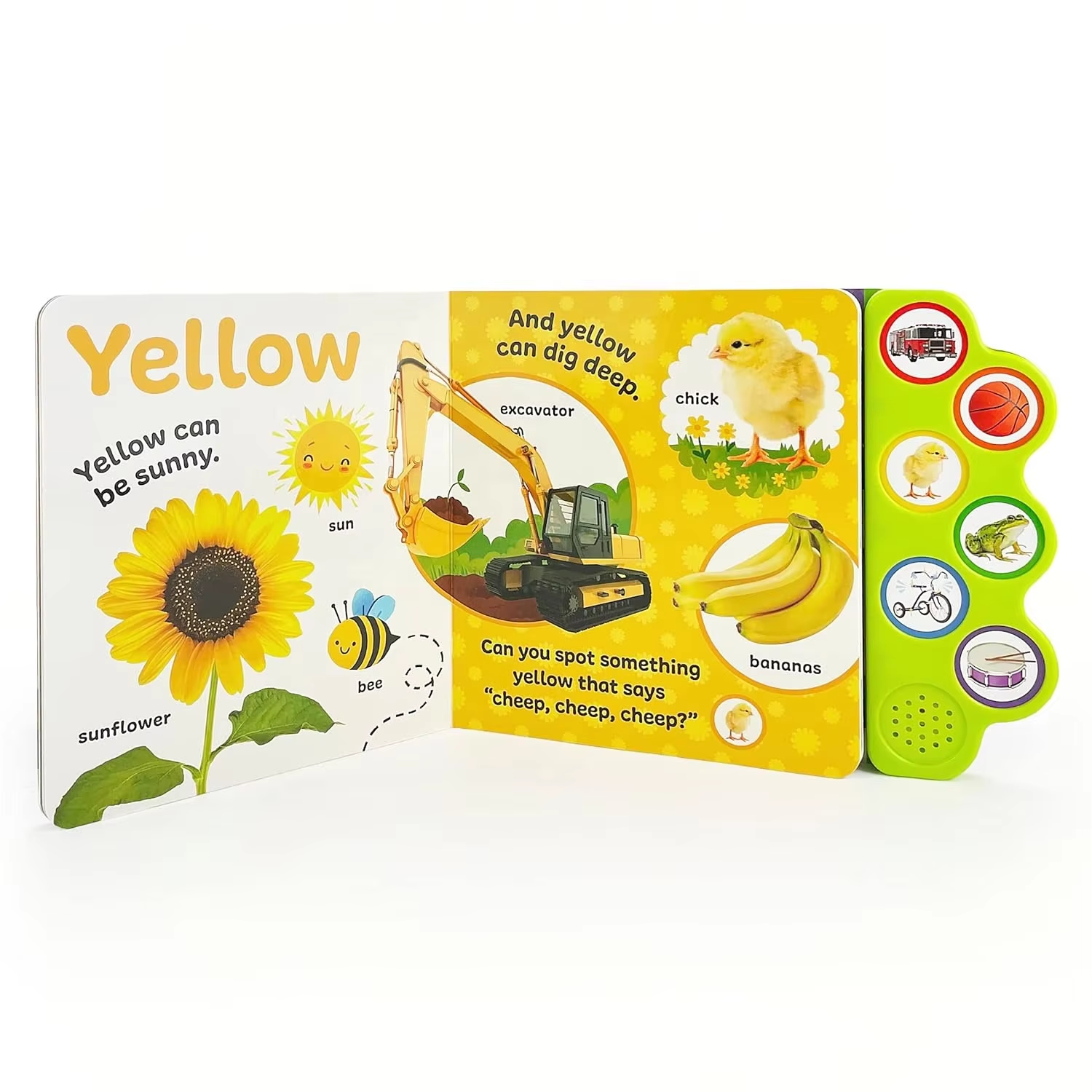
An interactive point-and-read picture book is a hybrid format that merges the tactile experience of a traditional printed book with responsive digital elements. When a child touches a designated spot on the page—often called a “hotspot”—the book triggers sound effects, spoken narration, or visual feedback via an accompanying device or built-in electronics. Unlike conventional picture books that rely solely on static images and text, these books invite children to tap, swipe, or press areas to “read” the story through touch, sound, and sight. This design aligns with the Universal Design for Learning framework, making stories accessible to visual, auditory, and kinesthetic learners alike. By turning passive page-turning into active exploration, interactive point-and-read picture books transform reading into a hands-on process where the child becomes a participant rather than a spectator—creating a richer, more immersive entry point into literacy, especially for young readers who may struggle to sustain attention with static books.
How Interactive Point-and-Read Picture Books Activate Early Literacy Skills
Interactive point-and-read picture books transform passive reading into an active, multisensory experience that directly builds foundational literacy skills. By integrating touch, sound, and sight, these books create richer neural connections than traditional print alone—supporting letter recognition, phonological awareness, and comprehension from the earliest stages.
Multisensory engagement: Linking touch, sound, and sight to strengthen neural pathways
When a child touches a “hotspot” and hears the corresponding word or sound effect, multiple sensory systems activate simultaneously—strengthening synaptic connections and deepening memory encoding. Research published in Early Childhood Research Quarterly found that children aged 3–5 using interactive picture books improved letter recognition by 28% and phonological awareness by 20% compared to peers using standard books. This multisensory reinforcement also supports Universal Design for Learning principles by accommodating diverse learning profiles. Memory retention climbs significantly: studies show multi-sensory input boosts recall by up to 45%, and children retain nearly 90% of content from interactive formats versus just 10% from plain text—a benefit especially pronounced for children from lower-income families, who often gain the most from structured, engaging literacy tools.
Dual-coding theory in action: Why simultaneous auditory + visual + motor input boosts comprehension
Dual-coding theory holds that information processed through verbal and visual channels is encoded more robustly than through one alone. Interactive point-and-read picture books extend this principle by layering motor input—pointing or pressing—onto auditory and visual cues. Spoken words pair with printed text and illustrations, while the child’s own physical action anchors meaning. This triple input creates overlapping mental representations that improve both immediate understanding and long-term recall. For example, consistent use correlates with a 40% increase in monthly word acquisition among preschoolers (Early Literacy Consortium, 2023). The act of touching while hearing reinforces symbol–sound relationships—a core decoding skill—and sustains attention 33% longer than passive listening. By embedding dual-coding principles into every interaction, these books help young brains build the neural scaffolding essential for fluent reading.
Key Design Features That Maximize Engagement in Interactive Point-and-Read Picture Books
Intuitive hotspots, responsive audio feedback, and contextual soundscapes
Well-designed interactive point-and-read picture books feature clear, touch-sensitive hotspots that respond instantly. When a child presses a character or object, the book plays a corresponding sound or phrase—reinforcing the link between image and word. Immediate, consistent feedback keeps attention focused and minimizes frustration. Contextual soundscapes—such as gentle rain or bird calls during a forest scene—deepen immersion without overwhelming the senses, especially when synced thoughtfully to page turns and narrative pacing.
Developmentally tuned scaffolding: Iconography, lexical progression, and pacing
Effective interaction design respects developmental readiness. Simple, intuitive icons (e.g., a hand or ear) guide where to touch or listen—reducing cognitive load and guesswork. Lexical progression ensures early pages use familiar, one-syllable words, while later spreads introduce slightly more complex vocabulary at a natural pace. Pacing is intentionally controlled: silence between sound clips gives children time to process, reflect, and respond. Preschools using such scaffolded books report 2.3× more peer-to-peer language exchanges during free play—an indication that skills transfer beyond reading time (industry observation, 2024). Together, these features ensure the book challenges without overwhelming, turning passive viewing into purposeful, joyful learning.
Measurable Learning Outcomes: Attention, Vocabulary, and Retention Gains
Research consistently shows that interactive point-and-read picture books produce quantifiable improvements in early literacy. When children touch a page to trigger narration, sound effects, or word pronunciations, multisensory engagement strengthens neural encoding—leading to faster recall, broader vocabulary, and sustained attention. Studies report 30% faster recall of story details, expressive vocabularies developing roughly 2.3 months ahead, and receptive language scores improving by 18% compared to peers using only traditional books. Attention and motivation rise by up to 37%, while memory retention reaches 60%—nearly double the 30% typical of passive listening. Immediate audio feedback also sharpens phonological awareness, with preschoolers showing an 18% improvement in sound discrimination after regular use.
| Learning Dimension | Measurable Improvement |
|---|---|
| Recall speed | 30% faster |
| Expressive vocabulary | 2.3 months ahead |
| Receptive language | 18% gain |
| Attention/motivation | 37% increase |
| Memory retention | 60% (vs. 30%) |
| Phonological awareness | 18% improvement |
These outcomes demonstrate that interactive point-and-read picture books do more than entertain—they deliver evidence-based literacy gains across core developmental domains.
FAQ
What is an interactive point-and-read picture book?
An interactive point-and-read picture book combines traditional printed pages with responsive digital elements like sound, narration, or visual feedback triggered by touching designated spots or “hotspots.”
How do these books support early literacy?
By engaging multiple senses—touch, sound, and sight—interactive picture books enhance letter recognition, phonological awareness, comprehension, and vocabulary acquisition.
What are the key design features of these books?
Features include intuitive touch-sensitive hotspots, responsive audio feedback, contextual soundscapes, and developmentally tuned scaffolding with progression in vocabulary and pacing.
What measurable benefits do children gain from using these books?
Children experience measurable increases such as 30% faster recall, improved vocabulary by 2.3 months, attention and motivation gains of 37%, and memory retention of 60% compared to passive formats.