
 EN
EN
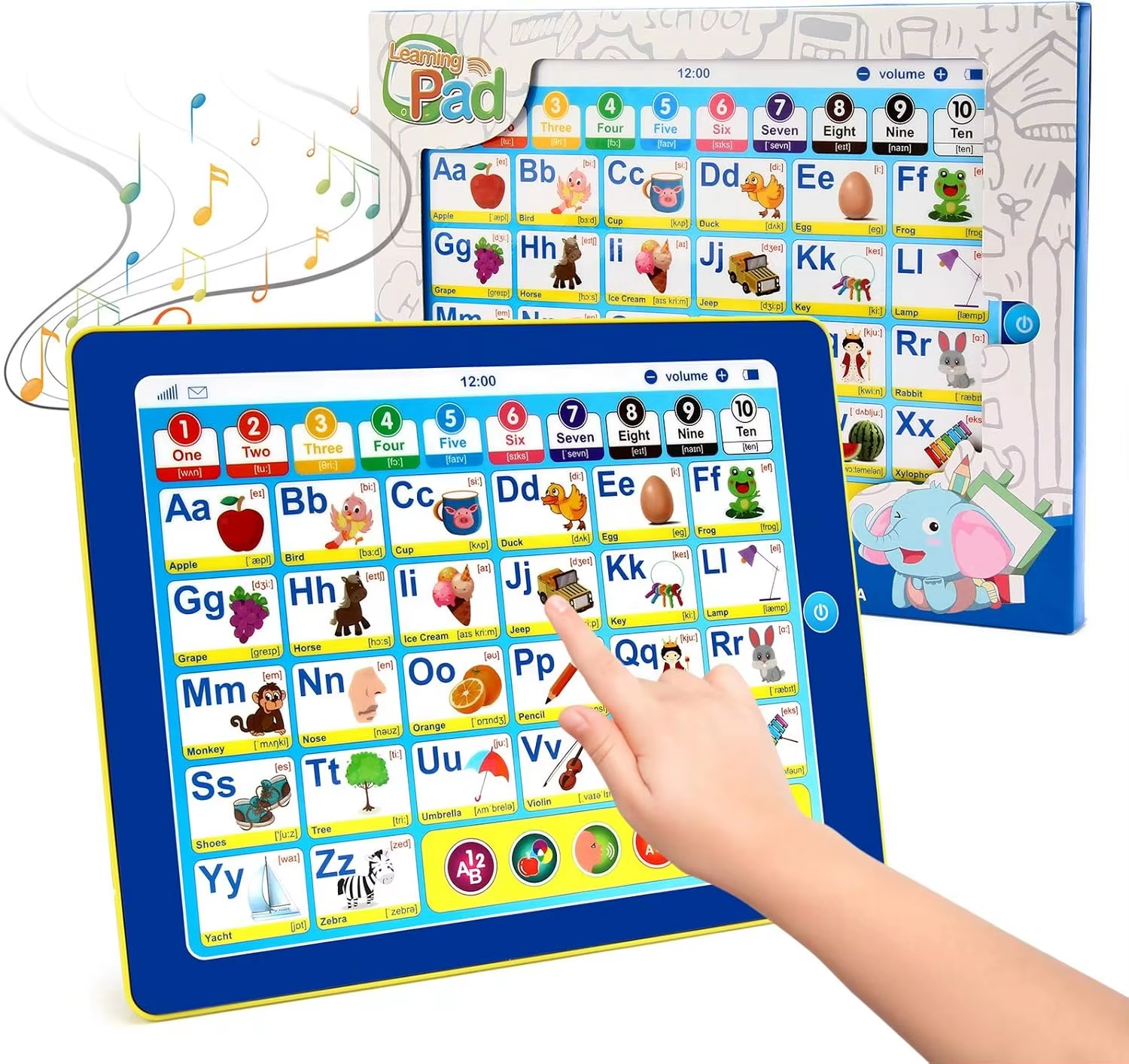
Language Development and Phonemic Awareness
Language development begins almost immediately in infancy. Talking early education sound books provide consistent exposure to correctly pronounced words through modeled speech—audio guides that reflect natural language patterns often underrepresented in everyday conversation. This repeated, high-fidelity auditory input helps establish neural pathways during critical developmental windows, a principle supported by decades of linguistic research dating back to foundational work in the 1950s.
How talking early education sound books support infant and toddler language acquisition through modeled speech and repetition
Repetition is essential for consolidating new linguistic information in developing brains. These books offer controlled, age-appropriate listening practice: clear articulation, comfortable volume levels, and pacing aligned with natural speech rhythms. Touch-activated sounds empower children to regulate tempo and repeat phrases at their own pace—turning passive listening into active engagement. As noted by clinical speech-language therapists, such tools help mitigate linguistic environmental deprivation, especially in households where time for sustained verbal interaction is limited.
Building phonemic awareness and accurate pronunciation via interactive audio feedback
Talking sound books directly strengthen phonemic awareness—the ability to identify, distinguish, and manipulate individual speech sounds. By allowing toddlers to hear precise pronunciations and then compare their own vocal attempts against those recordings, these tools provide immediate, nonjudgmental auditory feedback. This articulatory reinforcement supports more accurate speech production over time. Research by MIT cognitive scientists shows that multisensory learning tools accelerate articulation skill development compared to auditory-only or visual-only instruction. Hardware design further enhances accessibility, with adjustable volume and response sensitivity tailored to individual sensory needs.
Vocabulary Expansion and Listening Comprehension
Multisensory reinforcement in talking early education sound books boosts vocabulary retention and semantic understanding
These books accelerate vocabulary growth by integrating auditory input with tactile exploration and visual context—activating multiple neural pathways simultaneously. A Scholastic 2023 report found that audiobook exposure introduces 40% more tiered vocabulary than independent reading, making sound books especially valuable for emerging bilingual learners and children with limited home literacy exposure. Illustrated vocabulary panels paired with synchronized audio reinforce semantic mapping, while repeated exposure to words embedded in meaningful narratives supports deeper conceptual understanding and expressive language development.
Structured auditory narratives strengthen listening comprehension and sustained attention
High-quality sound books use intentional storytelling techniques—predictive pauses, character-specific voice cues, and layered soundscapes—to build auditory processing skills progressively. Children learn to anticipate narrative flow, recall sequential details, and infer meaning without visual scaffolding—skills that translate directly to classroom success. Studies cited by GoGoFun Learning show that children engaged with structured sound book narratives demonstrate up to 30% longer sustained attention spans compared to traditional read-aloud sessions, reflecting stronger auditory memory and listening stamina.
Foundational Literacy and Prereading Skills
Talking early education sound books cultivate core prereading competencies by bridging auditory language with tangible print experiences. They transform abstract literacy concepts into concrete, developmentally appropriate interactions.
Book handling, print awareness, and tactile engagement foster early literacy readiness
Children develop foundational print awareness as synchronized narration highlights text progression—helping them connect spoken words to written symbols. Physical page-turning reinforces book orientation, left-to-right tracking, and story sequencing, while targeted button presses link specific sounds to letters or words. These purposeful, multisensory interactions turn listening into active participation with print conventions—laying groundwork for decoding, fluency, and eventual independent reading.
Balancing Technology and Human Interaction
A talking early education sound book is a powerful learning tool—but it must complement, not substitute, human interaction. While it delivers consistent pronunciation and engaging audio prompts, it cannot replicate the emotional responsiveness, adaptive scaffolding, or social reciprocity inherent in caregiver-led communication. Eye contact, facial expression, and contingent responses are irreplaceable for building secure attachment and rich language models. Use sound books during supervised playtime as intentional learning extensions—not background noise or digital babysitters. After each session, reinforce learning through open-ended questions (“What did the bear do next?”) or real-world connections (“Can you find something red like the apple in the book?”). This balanced integration ensures technology amplifies, rather than displaces, the relational foundation of early language development.
FAQs
What is phonemic awareness?
Phonemic awareness refers to the ability to identify, distinguish, and manipulate individual speech sounds in spoken language. It is a crucial skill for language development and literacy.
How do talking sound books help with infant and toddler language acquisition?
Talking sound books promote language acquisition by using modeled speech, repetition, and interactive auditory feedback to teach accurate pronunciation and strengthen neural pathways for language processing.
Can sound books improve vocabulary in emerging bilingual children?
Yes, sound books provide enhanced vocabulary exposure by integrating auditory input with visual and tactile elements, making them particularly beneficial for bilingual learners or children with limited literacy exposure at home.
Are sound books enough to replace caregiver interaction?
No, while sound books are valuable tools, they should complement human interaction. Caregiver-led communication offers emotional responsiveness and adaptive learning experiences vital for language and emotional development.