 EN
EN
Cognitive Foundations: How Children’s Development Shapes Interactive Point-and-Read Picture Book Use
Matching interactive point-and-read picture book features to emerging attention, memory, and language milestones
Children’s cognitive abilities unfold in predictable stages—and effective interactive point-and-read picture books align precisely with these developmental windows. At 12 months, attention spans are brief—typically under two minutes per page—so books with high-contrast images and single-touch sound effects (e.g., a dog barking on tap) support focused, low-effort interaction. By 18 months, working memory expands enough to hold two to three sounds or labels simultaneously; repetition after each tap reinforces consolidation. Between 18 and 24 months, vocabulary grows rapidly—often 10–20 new words per week—and books that pair a clear spoken label with each touch (e.g., “dog” + image + bark) strengthen one-to-one correspondence between sound, symbol, and meaning. As attention lengthens to five or six minutes by age two, introducing simple two-step sequences (“tap the cat, then hear it purr”) builds executive function without overwhelming the child. Aligning interactivity with these milestones prevents frustration and supports optimal learning.
Pictorial comprehension shifts from iconicity to abstraction across 12–36 months
Infants begin with a strong preference for realistic, iconic images: at 12 months, photographs of objects outperform stylized drawings because recognition depends on visual fidelity. Early interactive point-and-read picture books should therefore use clear photographs or highly realistic illustrations. Between 18 and 24 months, children gradually accept simplified line art—if key features remain intact (e.g., a dog retains four legs and a tail). By 30 months, symbolic understanding accelerates: children recognize abstract shapes like stars or squares even when minimally rendered. A leading manufacturer’s research confirms that by age three, most children correctly identify such symbols in interactive contexts. Designers should scaffold this progression deliberately—starting with realism for youngest users and layering in stylization only as visual literacy matures. This approach reduces cognitive load while building foundational skills for later symbolic learning, including letter recognition. As noted in peer-reviewed child development literature, delayed transition to abstraction by age three can signal challenges in emergent literacy—and well-designed interactive books help bridge that gap.
Design & Interaction Principles for Age-Appropriate Interactive Point-and-Read Picture Books
Minimizing cognitive load while maximizing engagement in toddlers (12–24 months)
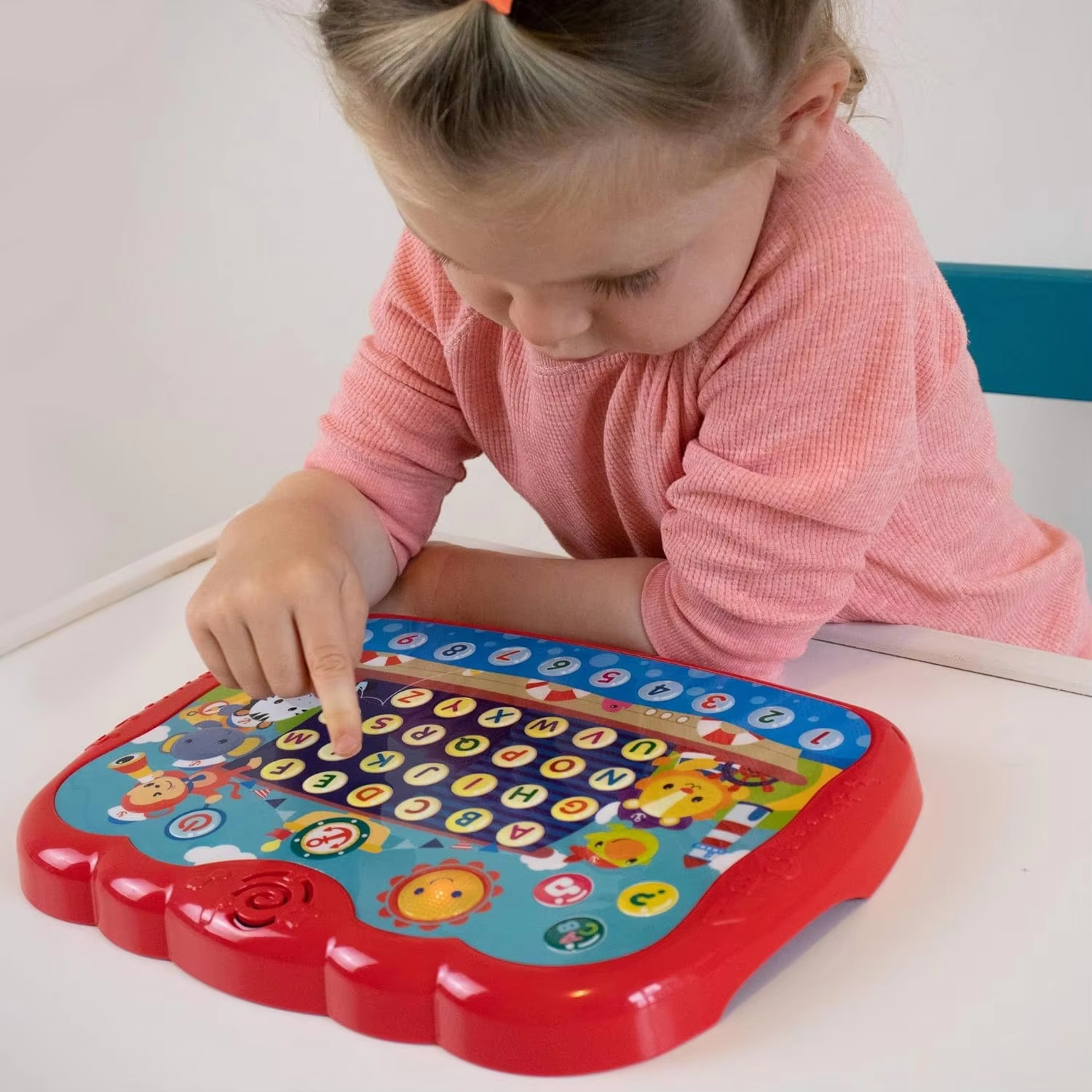
Toddlers process information in short, intense bursts—so effective interactive point-and-read picture books for this age group limit on-screen options to one or two large, high-contrast touch zones per page. Too many hotspots overwhelm working memory and trigger disengagement. Immediate, consistent feedback—a single tap yields the same clear sound or animation every time—reinforces cause-and-effect understanding with minimal mental effort. Responses should last no more than two seconds to match transient attention spans. Background music, overlapping voices, and visual clutter compete for limited processing resources; instead, clean layouts with ample white space and minimal text let the child focus on the core interaction. This intentional simplification sustains engagement over short sessions—turning a 3-minute interaction into a meaningful, fatigue-free learning opportunity.
Scaffolding joint attention and verbal response through interactive point-and-read mechanics
Joint attention—the shared focus between child and caregiver on an object—is foundational for early language development. Interactive point-and-read mechanics amplify this milestone rather than replace it. When a child taps a picture of a dog and hears “dog” plus a bark, the technology creates a natural pivot point for caregiver involvement: the adult can echo the word, point to a real dog, or ask, “What does the dog say?” Effective designs build in a brief pause after audio playback, giving caregivers time to respond. Some books embed gentle prompts (“Can you find the ball?”) that invite verbal or gestural answers—prompting the child to think, point, and speak within the shared focus. These interactions also model turn-taking: child taps → book responds → caregiver comments. Structured this way, the book becomes a collaborative tool—not a passive screen—but a catalyst for rich, responsive dialogue that strengthens vocabulary, social reciprocity, and communication intent.
Practical Age Group Matching Framework for Interactive Point-and-Read Picture Books
Choosing the right interactive point-and-read picture book depends less on chronological age and more on observable developmental readiness—specifically attention span, physical handling ability, and understanding of cause-and-effect. For infants up to 12 months, sensory exploration matters most: sturdy board books with high-contrast imagery and one simple interaction (e.g., a light-up button or single sound) support early engagement without demanding sustained focus. Between 12 and 24 months, toddlers benefit from robust picture books featuring one clear, easy-to-trigger interaction per page—ideally tied to familiar animals or objects—and requiring minimal fine-motor control. From age two to three, growing memory and narrative awareness allow for multiple touch points and simple story sequences (e.g., “tap the duck, then hear it quack”). Children aged three and older can manage longer narratives and multi-step interactions independently—making standard picture books with layered audio triggers ideal. The table below reflects this developmental alignment:
| Age Group | Book Type | Key Features for Interactive Point-and-Read |
|---|---|---|
| 0–12 months | Board book | High contrast, durable pages, minimal interaction (one sound or light) |
| 12–24 months | Sturdy picture book | Single-tap response, familiar themes, short attention span |
| 2–3 years | Mixed board & picture book | Multiple touch points, simple storyline, cause-and-effect sequencing |
| 3+ years | Standard picture book | Longer narrative, sequenced interactions, independent use |
Always prioritize the child’s current capacity for joint attention and physical manipulation—and remember: flexibility is essential. Development isn’t linear, and the best interactive point-and-read picture books meet children where they are—not where a calendar says they should be.
FAQ Section
What are interactive point-and-read picture books?
Interactive point-and-read picture books are books that combine traditional reading materials with interactive elements, such as touch-sensitive pages, sound effects, and animations, to engage young children in hands-on learning.
Why are cognitive milestones important in designing these books?
Cognitive milestones guide how children process information, develop language, and stay focused. Designing books aligned to these stages ensures that the content matches the child's developmental readiness, making learning effective and enjoyable.
What kinds of visuals are optimal for different age groups?
Infants prefer realistic, iconic images, while toddlers gradually adapt to abstract and symbolic visuals. The transition from high-fidelity photographs to simplified illustrations aligns with their evolving visual comprehension.
How do interactive books promote caregiver involvement?
Interactive books provide cues, such as audio responses or embedded prompts, to encourage caregivers to engage in shared dialogues, point to real-world examples, or ask related questions, enhancing bonding and learning.
What features should I look for in a point-and-read picture book?
Seek features that match your child's developmental stage, such as simple interactions and high-contrast images for infants or multi-touch narratives and sequenced activities for older toddlers and preschoolers.