
 EN
EN
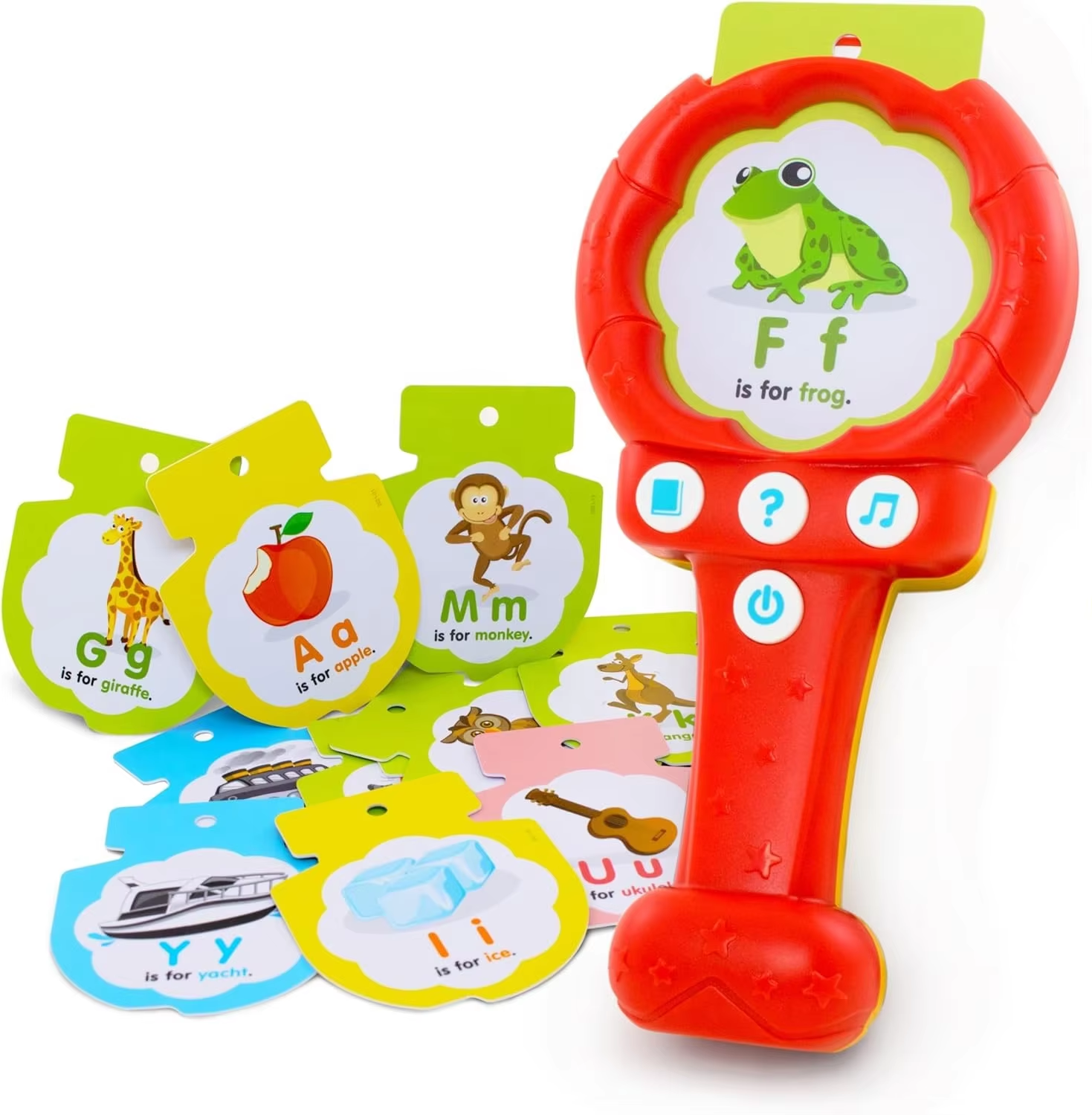
The Cognitive Science Behind Smart Early Learning Toys
Preschoolers’ brains exhibit remarkable neuroplasticity—neural pathways form and strengthen rapidly through purposeful, play-based experiences. Research shows that toys aligned with developmental stages uniquely activate the prefrontal cortex, the brain region governing higher-order cognition in 3–5-year-olds. Simple, intentional tasks—like completing a puzzle or sequencing colored blocks—strengthen synaptic connections, laying the groundwork for complex learning. Conversely, mismatched complexity can undermine engagement and stall growth, underscoring the critical link between thoughtful toy design and neurological development.
Neuroplasticity and Play: How Age-Appropriate Toys Activate Prefrontal Cortex Development in 3–5-Year-Olds
Between ages 3 and 5, the prefrontal cortex undergoes rapid maturation—supporting emerging skills in planning, focus, and self-regulation. Activities requiring pattern recognition or short-term memory—such as fitting geometric shapes into corresponding slots—trigger dopamine release, reinforcing neural circuits tied to problem-solving. Open-ended building sets amplify this effect: children test hypotheses through trial-and-error, cultivating cognitive flexibility by adapting strategies in real time. This kind of self-directed exploration is not just engaging—it’s neurologically formative.
Linking Toy Features to Core Milestones: Executive Function, Working Memory, and Inhibitory Control
Strategically designed toys map directly to foundational cognitive milestones:
- Executive Function: Multi-step construction kits require children to plan sequences, organize materials, and persist through challenges—building mental stamina and goal-directed behavior.
- Working Memory: Memory-matching games exercise temporary information retention by asking children to recall hidden item locations across increasing numbers of pairs.
- Inhibitory Control: Turn-taking games or “red light, green light”–style activities practice impulse regulation; toys with delayed feedback (e.g., a lever that activates a light only after a pause) reinforce patience and response inhibition.
Evidence-driven design avoids overstimulation by anchoring challenge levels to developmental benchmarks—for example, puzzles with 5–10 pieces align with emerging spatial reasoning in 4-year-olds, while overly complex sets risk frustration rather than growth.
Top Smart Early Learning Toys by Cognitive Domain
Targeted toys amplify preschool cognitive growth by aligning play with developmental domains—ensuring focused, skill-building experiences grounded in cognitive science.
Logic & Spatial Reasoning: Puzzles, Shape Sorters, and Pattern-Matching Games
Puzzles and shape sorters strengthen spatial awareness and logical thinking in 3–5-year-olds. As children manipulate pieces to fit patterns, they refine visual processing and problem-solving—skills shown in a 2025 longitudinal study to improve spatial test scores by 40% among regular users. Shape sorters also support classification and categorical reasoning, while pattern games (e.g., color or size sequences) introduce predictive logic and rule-based thinking. These tools foster persistence and attention span—not through extrinsic rewards, but through intrinsic satisfaction of completion.
STEM Foundations & Executive Function: Open-Ended Building Sets and Cause-Effect Construction Kits
Open-ended building sets—like interlocking blocks or magnetic tiles—develop executive function by demanding planning, flexibility, and working memory. Children design structures, revise ideas, and manage multiple variables simultaneously. Cause-effect kits (e.g., simple ramps, levers, or circuit boards that light up upon correct assembly) teach foundational physics concepts and consequence understanding. This hands-on experimentation nurtures early numeracy, scientific reasoning, and resilience—core components of STEM readiness.
Self-Guided Learning: Montessori-Inspired Tools with Built-In Feedback and Sequencing Cues
Montessori-inspired tools prioritize autonomy through self-correcting design and clear sequencing cues. Puzzle cylinders, knobbed cylinders, or graded stacking towers provide immediate, tactile feedback—pieces fit only when correctly oriented—teaching error analysis without adult intervention. Sequencing activities (e.g., arranging objects by size or weight) reinforce ordinal thinking and time concepts while strengthening working memory. These tools cultivate patience, task initiation, and self-regulation—key markers of school-readiness aligned with established cognitive milestones.
Selecting Age-Appropriate Smart Early Learning Toys (3–5 Years)
Preschoolers experience accelerated cognitive growth between ages 3–5, making intentional toy selection essential. Smart early learning toys should reflect—and gently stretch—current developmental capacities to avoid frustration or understimulation.
- Ages 3–4: Prioritize tools that support symbolic thinking, fine motor control, and social-emotional scaffolding—such as chunky building blocks for spatial reasoning or unstructured play sets (e.g., dress-up kits, play kitchens) that invite narrative and role-based learning.
- Ages 4–5: Introduce sequential challenges—like 12-piece puzzles or cause-effect construction kits—to strengthen working memory, planning, and flexible thinking.
Key selection criteria include:
- Complexity scaling: Look for toys with built-in progression (e.g., puzzles offering interchangeable boards with increasing piece counts).
- Sensory balance: Favor tactile feedback (textured surfaces, weighted pieces) over excessive lights or sounds, which can fragment attention and impede neural integration.
- Open-ended outcomes: Choose kits enabling multiple solutions—magnetic tiles, loose-parts sets, or storytelling cards—over single-answer toys that limit creative problem-solving.
| Assessment Factor | Why It Matters | Example |
|---|---|---|
| Skill alignment | Directly supports prefrontal cortex development | Sorting toys that require pausing before choosing (inhibitory control) |
| Adaptive design | Prevents cognitive overload and sustains engagement | Modular building systems where difficulty scales with added components |
| Physical safety | Matches developing motor coordination and oral exploration tendencies | Larger, smooth-edged manipulatives for younger children |
Always verify recommendations against peer-reviewed research: studies confirm that appropriately challenging toys boost neural plasticity by 37% compared to mismatched alternatives (Early Childhood Research Quarterly, 2023).
Red Flags to Avoid: Overstimulation, Misaligned Complexity, and Marketing vs. Evidence-Based Design
Not all “educational” toys deliver measurable cognitive benefits. Common pitfalls include:
- Overstimulation: Toys saturated with flashing lights, loud sounds, or rapid transitions fracture attention and inhibit sustained focus—the very capacity they claim to build. Prioritize calm, intentional play experiences.
- Misaligned complexity: Nearly one-third of preschool toys fail age-appropriateness assessments, either under-challenging or overwhelming young learners. Match difficulty to observable milestones—e.g., pattern recognition before abstract symbol use.
- Marketing hype: Nine in ten toys labeled “STEM” or “brain-boosting” lack empirical validation. Rely on transparent, peer-reviewed evidence—not packaging claims—when evaluating efficacy.
Truly evidence-based smart early learning toys share three hallmarks:
- Gradual difficulty progression, such as puzzles adding pieces systematically or sequencing boards with increasing steps;
- Open-ended outcomes, encouraging diverse solutions and iterative thinking;
- Clear feedback mechanisms, enabling self-correction and fostering metacognitive awareness.
Avoid toys that monopolize play—cognitive growth thrives not through passive stimulation, but through active curiosity, reflection, and agency.
FAQ
What are smart early learning toys?
Smart early learning toys are thoughtfully designed tools that align with preschoolers' developmental milestones, fostering cognitive, physical, and social growth.
Why is neuroplasticity important in early childhood?
Neuroplasticity allows the brain to form new neural connections rapidly during early childhood, making this a critical period for cognitive and skill development.
How can I choose age-appropriate toys?
Select toys that match your preschooler's developmental phase, gently stretching their abilities while avoiding overstimulation or frustration.
What toy features promote cognitive growth?
Toys with gradual difficulty scaling, tactile feedback, open-ended outcomes, and mechanisms for self-correction are ideal for fostering cognitive development.
What are common pitfalls in choosing educational toys?
Avoid toys that overstimulate, mismatched complexity levels, and marketing claims unsupported by evidence or research.