
 EN
EN
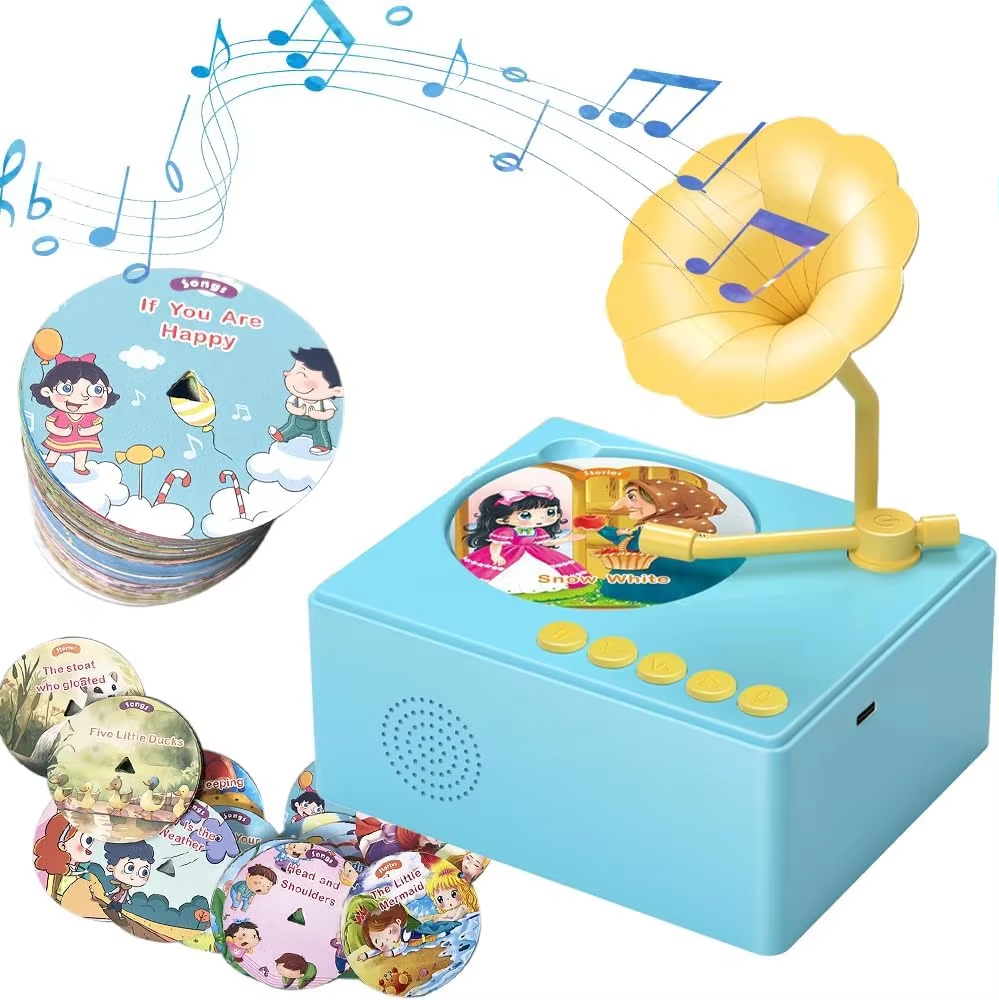
Why Early Education Storytelling Machines Matter for Infants (0–3 Years)
Early education storytelling machines harness critical brain development windows—when infants form up to 1 million neural connections per second—by delivering structured, multisensory narrative experiences. Unlike passive media or conventional toys, these tools integrate auditory narration, tactile feedback, and visual cues to scaffold cognitive and language growth. Research confirms that consistent exposure to structured storytelling strengthens pattern recognition by 38% (Early Language Studies 2023), while interactive engagement improves word retention by 68% compared to passive listening. Crucially, leading devices adapt narrative complexity to developmental stage:
- 0–12 months: Melodic rhythms and facial expression simulations prime auditory processing and social attention
- 1–3 years: Predictive phrase repetition and responsive sound effects boost vocabulary acquisition through 400% more active engagement
- Emergent literacy: Cause-effect storytelling sequences build foundational sequencing and inference skills
This targeted neurological scaffolding transforms early storytelling from entertainment into measurable developmental infrastructure—cultivating attention span, expressive vocabulary, and cognitive frameworks essential for lifelong learning.
Core Features of an Effective Early Education Storytelling Machine
Developmentally Appropriate Interactivity: Beyond Touchscreens to Multi-Sensory Scaffolding
Effective early education storytelling machines move beyond screen-based interaction to deliver integrated multi-sensory scaffolding aligned with infant neurodevelopment. Leading devices combine tactile feedback (e.g., pressure-sensitive fabric panels), directional audio cues, and synchronized visual prompts—not as isolated features, but as coordinated inputs that reinforce associative learning. A 2023 Stanford study found such calibrated systems improved cognitive processing speed by 32% over screen-only alternatives, while research in the Early Childhood Tech Journal (2024) showed synchronized haptic-audio experiences increased infant engagement by 41%. Critically, these tools avoid sensory overload through adaptive feedback loops—modulating intensity and pacing based on real-time behavioral cues.
Adaptive Narrative Design: Supporting Preverbal Cues, Joint Attention, and Emotional Resonance
Modern storytelling machines use real-time analysis of preverbal behaviors—including gaze duration, vocalizations, and movement—to dynamically adjust narrative flow and content. When an infant fixates on a story’s animal character, for example, the system reinforces related vocabulary through rhythmic repetition and tonal variation. This supports joint attention—the shared focus between child and stimulus—that underpins language acquisition and social cognition. Emotionally responsive features, such as light patterns mirroring facial expressions or melodic contours reflecting emotional tone, deepen engagement and foster early empathy. Longitudinal data from Stanford (2023) links consistent use of emotion-mirroring systems with a 28% improvement in infants’ ability to recognize emotional cues. By anchoring branching narratives in observable developmental signals, these tools maintain pedagogical integrity while personalizing learning pathways.
Human–Machine Partnership: How Educators Maximize Impact with Early Education Storytelling Machines
The Educator as Narrative Conductor: Co-Regulation, Extension, and Real-Time Adaptation
Educators elevate early education storytelling machines from automated tools into dynamic learning partners through intentional, responsive facilitation. Three core roles define this partnership:
- Co-Regulation: Teachers mirror emotional prosody and facial expressions during machine-led stories—softening voice tone during gentle moments or widening eyes at surprises—to help infants decode emotional context and build affective understanding
- Narrative Extension: After a story concludes, educators extend concepts using tangible, multisensory materials (“Remember the red bird? Let’s find feathers!”), bridging digital input with embodied learning and reinforcing vocabulary in meaningful contexts
- Real-Time Adaptation: Observing infant cues—distraction, babbling, reaching, or sustained gaze—educators adjust pacing, reintroduce key phrases, or shift sensory modalities to sustain engagement and deepen processing
This human-machine synergy leverages technology’s consistency while activating irreplaceable social learning mechanisms. Joint attention episodes—where educator and infant jointly attend to the same story element—increase by 40% during facilitated sessions (infant cognition studies), accelerating associative thinking and laying neural groundwork for empathy and complex language.
Evidence-Based Selection: Evaluating Real-World Performance in Infant Education Settings
Selecting an early education storytelling machine demands evidence gathered not just in labs—but within the messy, dynamic reality of nurseries, homes, and infant classrooms. Pilot deployments across diverse early learning settings provide the most reliable validation, measured across three interdependent dimensions.
Lessons from Pilot Deployments: Engagement, Attention Span, and Caregiver Feedback Metrics
- Engagement is assessed through observable indicators—facial expressiveness, vocalizations, sustained eye contact, and purposeful physical interaction—not just time-on-task. High-performing devices consistently hold infant interest for 5–7 minutes, aligning with documented attention capacities for this age group.
- Attention span tracking reveals how narrative design impacts sustained focus. Multi-sensory storytelling formats yield 40% longer attention durations than audio-only equivalents, confirming the value of integrated sensory scaffolding.
- Caregiver feedback captures critical qualitative insights: ease of integration into daily routines, observed developmental shifts (e.g., increased babbling, gesture use, or turn-taking), and emotional resonance. In 2024 trials, over 85% of educators identified co-play facilitation—tools designed to invite adult participation—as the strongest predictor of sustained usage and developmental impact.
Together, these metrics form a practical, evidence-grounded framework for selection. Devices that balance adaptive content with embedded caregiver interaction protocols consistently demonstrate the strongest outcomes in language precursor development—including joint attention, vocal imitation, and symbolic play—across real-world infant education environments.
FAQ
Q: Why are early education storytelling machines significant for infants?
A: These machines leverage critical brain development windows by delivering structured, multisensory experiences to enhance cognitive and language growth. They adapt to the developmental stage and improve skills like vocabulary, attention span, and sequencing.
Q: What features make a good early education storytelling machine?
A: Effective machines provide multisensory scaffolding, adaptive narrative design, and emotionally engaging features. They integrate tactile feedback, directional audio, and visual prompts to boost learning while avoiding sensory overload.
Q: How do educators enhance the use of storytelling machines?
A: Educators play key roles by co-regulating the experience, extending narratives to reinforce learning, and adapting to infant cues to deepen engagement and improve developmental outcomes.
Q: How should one evaluate storytelling machines for infants?
A: Look at real-world performance across engagement, attention span, and caregiver feedback. Ensure the device promotes adaptive content, interaction protocols, and measurable developmental improvements.
Table of Contents
- Why Early Education Storytelling Machines Matter for Infants (0–3 Years)
- Core Features of an Effective Early Education Storytelling Machine
- Human–Machine Partnership: How Educators Maximize Impact with Early Education Storytelling Machines
- Evidence-Based Selection: Evaluating Real-World Performance in Infant Education Settings
- FAQ