
 EN
EN
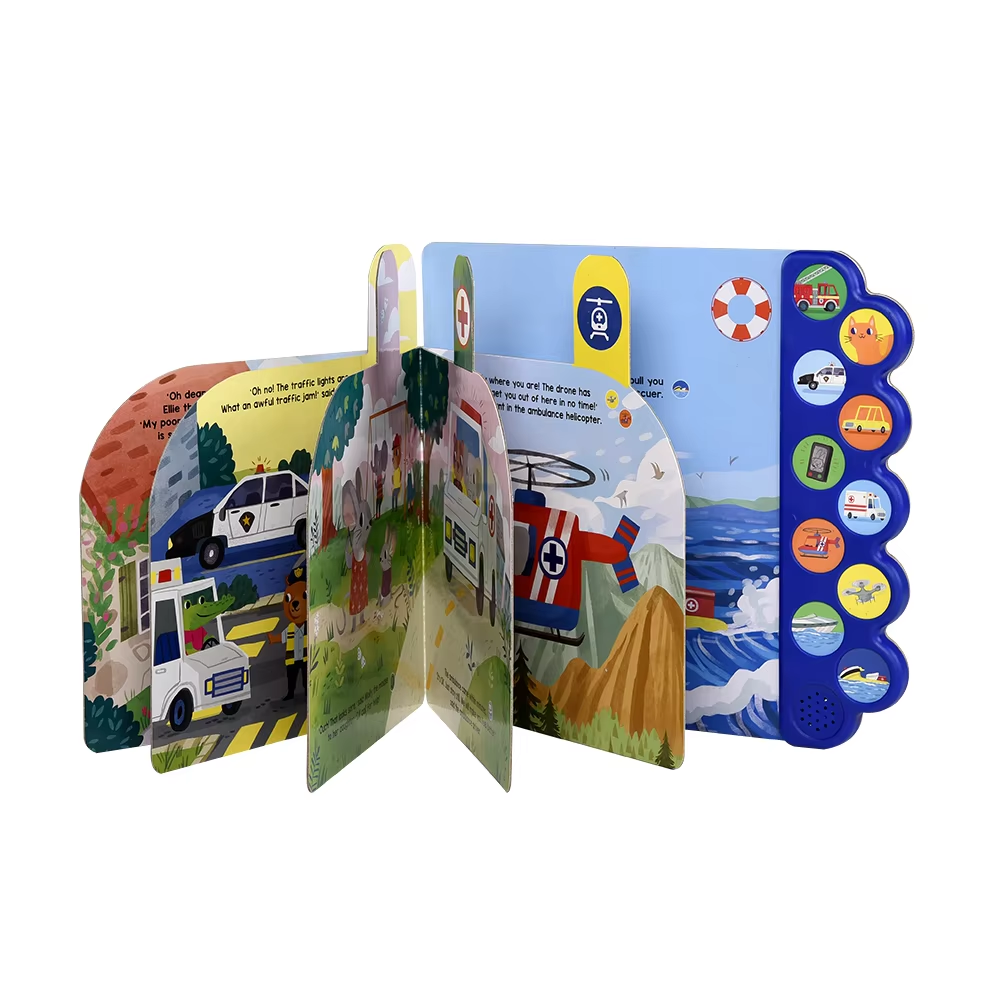
Why OEM Is the Strategic Choice for Interactive Point-and-Read Picture Books
Rising Demand for Multisensory Early Literacy Tools Drives Brand Investment
Global demand for multisensory early literacy tools has grown 18% since 2021, as parents and educators increasingly prioritize engaging, hands-on learning experiences for young children (Grand View Research, 2023). Families are willing to pay a premium for screen-free products that meaningfully support language development—accelerating market growth for interactive point-and-read picture books. Yet most consumer and educational brands lack the specialized manufacturing infrastructure, technical expertise, and regulatory experience required to produce these complex devices in-house. For them, partnering with an experienced OEM is not just practical—it’s a strategic imperative to enter the market with speed, safety, and scalability.
OEM Cuts Time-to-Market by Up to 47% vs. In-House Development
Building internal production capacity for interactive books demands significant investment in custom tooling, sensor calibration systems, audio firmware validation, and compliance testing labs—costs few small or mid-sized brands can justify. According to the Consumer Manufacturing Innovation Report 2024, OEM partnerships reduce average time-to-market by up to 47% compared to full in-house development. These partners bring pre-qualified supply chains, ISO-certified quality control processes, and deep domain knowledge in embedded audio systems—while enabling brands to retain full ownership of design, branding, and IP. The result is faster launch cycles, lower capital risk, and uncompromised creative control: a decisive advantage in a competitive, fast-moving category.
Core Technical Capabilities for High-Performance Interactive Point-and-Read Picture Books
Precision Audio Integration: Battery-Free Point-and-Read Sensors and Low-Latency Sound Boards
High-performance interactivity begins with seamless audio responsiveness. Leading OEMs deploy battery-free capacitive sensors embedded directly into board pages—eliminating loose batteries, reducing bulk, and enhancing child safety. These sensors pair with ultra-low-latency sound boards that deliver clear, synchronized audio within 100 milliseconds of contact. This near-instant feedback sustains immersion and supports cognitive processing during early language acquisition. Critically, the battery-free architecture also lowers total cost of ownership for families and maintains a slim, ergonomic page profile ideal for small hands.
Child-Safe, Durable Production: Die-Cut Board Construction, Tactile Layering, and Embedded Electronics
Durability isn’t an afterthought—it’s foundational. Top-tier OEMs use rigid, precision die-cut board stock as the structural base for every interactive page, engineered to resist tearing, warping, and repeated flexing from toddler handling. Tactile layering—such as embossed textures, raised outlines, or soft-touch laminates—is integrated not just for sensory engagement but to physically encapsulate and protect embedded electronics between protective board layers. This dual-purpose construction prevents component exposure, meets ASTM F963 mechanical safety thresholds before formal testing, and ensures long-term reliability. Independent durability testing confirms properly built units withstand over 1,000 consecutive taps and page turns without degradation—delivering consistent performance across classroom and home use.
End-to-End OEM Workflow: From Concept to Global Compliance for Interactive Point-and-Read Picture Books
Modular Audio ICs Enable Multi-Language Tap-to-Hear Functionality (12+ Languages)
At the heart of scalable production lies modular audio integrated circuits (ICs). These compact, field-programmable chips store rich, high-fidelity audio libraries supporting 12+ languages—and allow brands to configure regional content during assembly, not after. Unlike legacy wired solutions, this architecture eliminates manual rewiring or firmware re-flashing for multilingual editions. Combined with battery-free sensor activation, it delivers plug-and-play functionality that slashes firmware development time and enables rapid localization without compromising audio fidelity or response speed.
Built-In Regulatory Assurance: ASTM F963, EN71-3, and CPSIA Testing at Assembly Stage
Compliance is engineered—not bolted on. OEM partners embed safety assurance directly into the production workflow: ASTM F963 (mechanical and physical hazards), EN71-3 (heavy metal migration), and CPSIA (lead and phthalate limits) testing occurs at the assembly stage, using accredited third-party labs. This proactive verification catches material or component issues before mass production—reducing recall risk by 32% versus post-production audits (U.S. Consumer Product Safety Commission, 2023). Additional validations include dielectric strength testing for electronics and puncture resistance/chemical migration analysis for paperboard substrates. Full material disclosure from suppliers enables real-time adjustments to meet evolving EU, U.S., and APAC regulatory requirements—without delaying launch.
FAQ
Why are interactive point-and-read picture books gaining popularity?
Interactive picture books are increasingly popular due to rising demand for screen-free, multisensory tools that support early literacy and language development in children.
What makes OEM a strategic choice for production?
OEMs provide the technical expertise, infrastructure, and regulatory experience necessary for brands to reduce time-to-market, maintain safety, and scale efficiently while focusing on design and branding.
What are the key technical features OEMs provide for these picture books?
Key features include battery-free capacitive sensors, low-latency sound boards, durable die-cut board construction, tactile layering, and embedded electronics ensuring safety and durability.
How do OEMs ensure safety compliance?
OEMs integrate safety testing—such as ASTM and CPSIA standards—into the production workflow, proactively identifying and resolving issues before mass production, thus reducing recall risks.