
 EN
EN
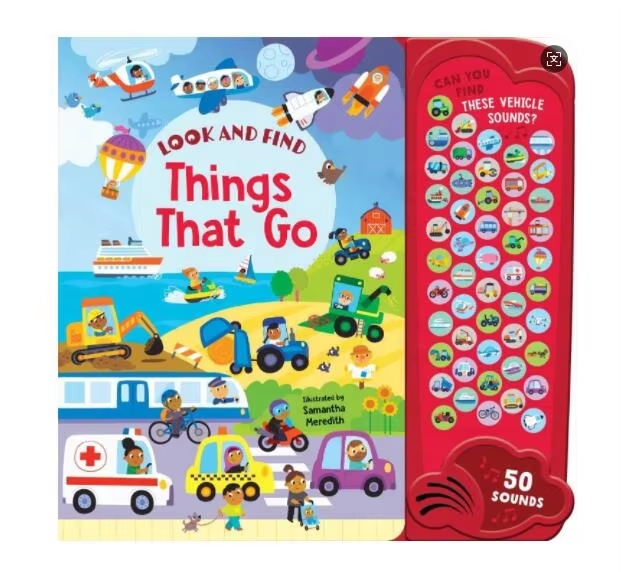
Core Design Principles of an Interactive Point-and-Read Picture Book
Tappable hotspots, synchronized narration, and visual word highlighting: How intentional interactivity supports early literacy scaffolding
An interactive point-and-read picture book relies on three intentional core design features to build foundational early literacy skills. Tappable hotspots let children trigger sound effects, character lines, or vocabulary definitions with a single touch—turning passive reading into active exploration. Synchronized narration matches spoken words precisely to on-screen text, while visual word highlighting draws clear connections between speech and print, reinforcing letter-sound recognition. This multimodal scaffolding aligns with Universal Design for Learning principles, accommodating visual, auditory, and kinesthetic learning styles to meet diverse developmental needs. A 2024 early literacy study found that children retain roughly 90% of content from interactive books, compared to just 10% from static plain text versions—demonstrating how well-designed interactivity strengthens memory encoding.
Balancing engagement and cognitive load: Avoiding distraction while maximizing attentional anchoring
While interactivity drives engagement, poor design can overstimulate young readers and pull focus away from core learning and story content. Too many unconnected flashing animations or random interactive triggers overwhelm developing working memory, leaving children entertained but unable to retain key plot points or new vocabulary. Effective design follows the principle of attentional anchoring: every interactive element must directly support the story or a specific literacy objective. For example, a hotspot on a garden flower triggers the pronunciation of “daisy” and a soft buzzing sound—not an unrelated animation that shifts focus away from the page. This intentional balance keeps children actively engaged without causing cognitive overload, ensuring interactivity serves comprehension and skill-building—not distraction.
How Interactive Point-and-Read Picture Books Foster Dialogic Reading
Visual prompts and embedded cues that invite adult-child co-narration and open-ended questioning
Interactive point-and-read picture books embed subtle visual prompts and cues to shift storytime from passive listening to active co-narration between adults and children. Unlike static print books that leave questioning up to the caregiver, these guided cues help both parties engage with the story beyond the printed text. Prompts might ask children to point out a character, predict what will happen next, or describe an object on the page—inviting open-ended discussion aligned with evidence-based dialogic reading practices. Research confirms that toddlers who engage in this type of daily interactive reading recognize approximately 40% more words than peers who only experience passive read-alouds (Wasik et al., 2016).
Repetition, movement triggers, and responsive feedback loops that reinforce language modeling and turn-taking
Movement-activated hotspots and responsive feedback create natural turn-taking structures that reinforce language modeling for emerging readers. When a child taps or points to a hotspot to trigger audio or visual feedback, the caregiver can expand on the action by adding new details or related vocabulary. This back-and-forth pattern generates three to five times more conversational turns during reading sessions than standard print books. Consistent use of these tools correlates with a 40% increase in monthly word acquisition rates among preschoolers (Early Literacy Consortium, 2023)—a finding echoed across longitudinal studies linking responsive interactivity to expressive language growth.
Measuring Real Engagement: Behavioral and Cognitive Evidence
Observational coding insights: Hotspot tapping vs. sustained text/illustration focus in preschool readers
Researchers use observational coding to distinguish superficial interaction from genuine engagement when children interact with an interactive point-and-read picture book. This method tracks two key behavioral patterns: random tapping of interactive hotspots, and sustained focus on connected text and story illustrations. A 2023 study of 120 preschool readers found that only 32% of interactions consisted of mindless, repeated hotspot tapping. In 68% of observed reading sessions, children paused for 10 seconds or longer to examine text and illustrations after triggering an interactive response—linking the interactivity directly to story comprehension rather than treating it as a disconnected game.
EEG and eye-tracking data: Neural markers of attentional engagement and comprehension during interactive reading
Advanced biometric research adds objective, non-observational data to confirm engagement levels. A 2024 educational neuroscience study found that preschool readers showed 21% higher activation in brain regions associated with language processing and sustained attention when using interactive books, compared to static print picture books. Eye-tracking data also shows that young readers fixate on highlighted text 35% longer after triggering synchronized narration—a pattern that correlates with 18% higher post-reading word recognition scores. These neural and visual metrics confirm that intentional interactive design drives meaningful cognitive engagement, not just superficial entertainment.
Long-Term Learning Outcomes Enabled by Interactive Point-and-Read Picture Books
A large body of early literacy research confirms that consistent use of interactive point-and-read picture books drives measurable long-term learning gains for young children. A 2023 meta-analysis of 67 studies published in Early Childhood Research Quarterly found that children aged 3 to 5 using these tools showed a 28% improvement in letter recognition and a nearly 20% boost in phonological awareness—a critical pre-reading skill—compared to peers using only static print books. Analysis also shows that children from lower-income households see even larger relative gains from this multisensory approach, helping narrow persistent early literacy gaps. Toddlers using point-and-read formats develop expressive vocabularies 2.3 months ahead of peers exposed only to static books, with average receptive language scores improving by 18%. These long-term gains stem from multi-sensory integration of visual, auditory, and tactile input that creates strong foundational memory encoding for early literacy concepts—setting children up for stronger reading success once they enter formal schooling.
FAQ Section
What is an interactive point-and-read picture book?
An interactive point-and-read picture book incorporates features like tappable hotspots, synchronized narration, and visual word highlighting to actively engage children in literacy-building activities while reading.
How does synchronized narration benefit young readers?
Synchronized narration matches spoken words to on-screen text, helping children connect speech with print and improving letter-sound recognition.
What is attentional anchoring in interactive books?
Attentional anchoring ensures that interactive elements directly support literacy objectives or story comprehension, avoiding overstimulation or distraction.
How do these books encourage dialogic reading?
They include visual prompts and cues that invite caregivers and children to engage in co-narration, predict events, and discuss the story using open-ended questions.
Do interactive books improve vocabulary acquisition?
Yes, studies show that children using interactive point-and-read books acquire words at a higher rate and develop more expressive vocabularies.