
 EN
EN
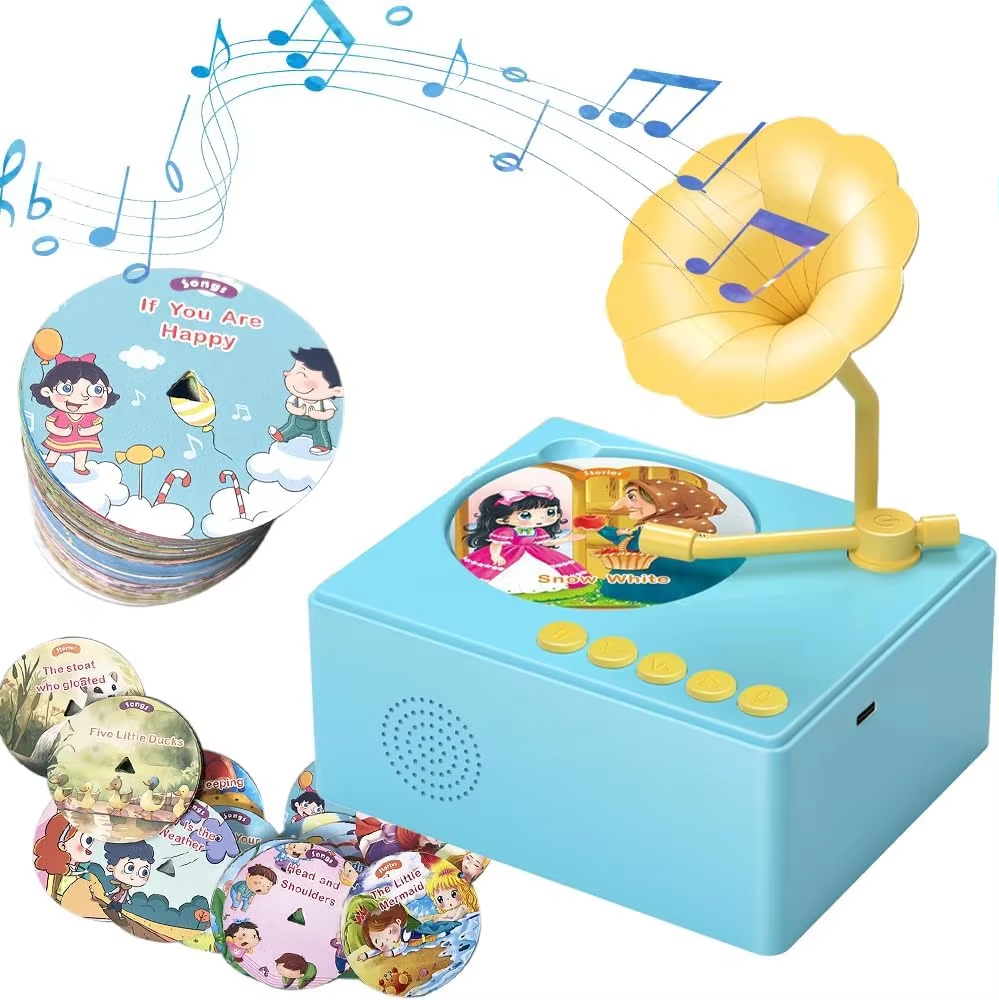
The Role of Early Education Storytelling Machines in Language Development
Phenomenon: Rising adoption of AI-powered storytelling apps in preschool settings
More preschools across the country are starting to bring AI storytelling apps into their classrooms, making story time much more engaging for kids. The programs have voice recognition features and touch screens so little ones can actually influence what happens next in the stories they hear. Teachers notice something interesting too - when kids interact with these digital tales, they tend to stay focused for about twice as long compared to regular picture books. This makes sense because young brains process information better when multiple senses are involved at once. According to surveys from early childhood educators, around two thirds of children who regularly use these interactive stories remember words better over time. The reason? These apps let each child learn at their own speed while getting instant responses that help build vocabulary naturally within age-appropriate scenarios.
Principle: How narrative exposure supports phonological awareness, syntax, and pragmatic skills
Structured storytelling through early education storytelling machines systematically builds three core language competencies:
- Phonological awareness: Rhythmic patterns and repetitive sounds in stories sharpen children's ability to identify phonemes, with rhythmic narration improving sound discrimination by 40% in bilingual learners
- Syntax development: Exposure to complex sentence structures (e.g., causal clauses, conjunctions) in narrative contexts helps internalize grammatical rules, accelerating sentence formation accuracy by 31%
- Pragmatic growth: Role-playing story scenarios cultivates conversational turn-taking and emotional inference, bridging vocabulary with social application. This tripartite approach creates neural pathways linking auditory processing, grammatical comprehension, and social communication—proven foundational for literacy milestones.
Case Study: Adaptive story engine boosts expressive vocabulary by 27% over 12 weeks (n=184, ages 3–5)
A controlled study measured language outcomes among 184 preschoolers using algorithm-driven narratives that adjusted lexical complexity in real time. Participants received stories that scaffolded new vocabulary through incremental challenges and contextual repetition. After 12 weeks, results showed:
| Metric | Intervention Group | Control Group | Improvement |
|---|---|---|---|
| Expressive vocabulary | 27% increase | 9% increase | +18 pts |
| Sentence complexity | 22% gain | 7% gain | +15 pts |
| Narrative recall accuracy | 41% higher | 19% higher | +22 pts |
The way the adaptive engine reused common but powerful words and phrases throughout engaging stories really helped kids who started behind in language skills. These children caught up at about 32 percent quicker rate compared to others in their class. What's interesting is that many of these words stuck around outside screens too. Teachers noticed students starting to use them naturally while playing together on the playground. So basically, this shows that adjusting story speed according to individual needs through tech can actually level the playing field for language growth, as long as it builds upon how our brains naturally learn and connect ideas over time.
Interactive Storytelling Features That Drive Vocabulary and Literacy Growth
Trend: From passive listening to interactive, multimodal stories with embedded vocabulary prompts
Today's storytelling devices for young learners go way past just playing sounds. They now feature touch screens, recognize hand movements, and even pop up vocabulary hints right in the story. Kids aren't just sitting there anymore listening passively. Instead they interact with stories by touching things on screen, hearing words repeated, and sometimes even feeling vibrations or other physical responses. Take the word gargantuan for example. When it shows up in a story about a really big monster, kids might see animated characters growing bigger and bigger on their tablets while hearing someone say the word clearly. Research from the Early Literacy Consortium back in 2023 found something interesting too preschoolers who play with these interactive stories pick up new words about 40 percent quicker compared to those who just listen to stories without any hands-on elements. The combination of seeing, hearing, and doing seems to help little brains remember words better over time.
Strategy: Overcoming the 'transfer deficit' with gesture-supported narration and pause-and-predict scaffolds
Digital learning tools are finding ways to connect with what kids actually do in their everyday lives. Most effective devices incorporate two main approaches that work well in practice. When kids hear words like enormous during storytelling, some systems prompt them to stretch out their arms wide, connecting body movements with vocabulary concepts. This simple act has been shown to help memory retention jump around 45%. The second technique involves built-in pauses where the system asks questions such as What happens next? These moments not only help children understand story structures better but also get them talking more actively. Putting these methods together changes how kids interact with content from just watching passively to engaging in actual conversation. Schools that have implemented these interactive features report seeing comprehension rates go up roughly 78% after about half a year. Teachers notice this makes a real difference in classroom discussions and reading skills overall.
Human-Machine Synergy: Maximizing Language Gains Through Co-Engagement
Controversy: Algorithmic personalization vs. joint attention—balancing adaptive pacing with social interaction
AI storytelling tools are causing quite a stir lately. The big question everyone seems to be asking is whether these algorithms can actually work alongside those important back-and-forth moments between kids and caregivers. Sure, these smart systems adjust words and reading speed based on what each child needs, but there's a catch. When parents read together, they naturally point out things in stories, ask questions that don't have one right answer, and show how to respond. These little interactions help children learn how to talk properly and understand complex sentences. Just sitting passively while a machine tells a story might miss out on teaching kids when to take turns speaking or how to recognize emotions in others. What we really need are better designed tools that help instead of taking over completely, preserving those face-to-face conversations that matter so much for developing language skills.
Evidence: Parent-mediated use of early education storytelling machines increases comprehension by 41% (JAMA Pediatrics, 2023)
Research published in JAMA Pediatrics back in 2023 looked at about 320 little kids in preschool and discovered something interesting about how caregivers interact during reading time. When moms and dads got really involved - stopping to talk about new words, guessing what happens next in the story, and linking tales to things happening in everyday life - comprehension test results went up around 40% after just 12 weeks. What makes this work so well? It combines the smart features of digital tools with what humans do best. Parents help put abstract concepts into context, show kids how to express themselves better, and offer genuine emotional responses too. Kids who had this kind of joint engagement didn't just pick up more vocabulary, they actually started using those words correctly when talking on their own. The bottom line seems clear enough: tech works wonders when it's part of regular social interactions instead of standing alone.
FAQ
What are the benefits of using AI-powered storytelling apps in preschool settings?
AI-powered storytelling apps make story time more engaging, improve focus, and help children remember words better as they offer personalized learning and instant feedback.
How do early education storytelling machines support language development?
They enhance language development by building phonological awareness, syntax, and pragmatic skills through structured storytelling and interactive narratives.
Can AI storytelling tools replace human interaction during reading time?
While AI storytelling tools can personalize learning, they should complement rather than replace human interaction, as caregiver engagement is crucial for developing comprehensive language skills.