
 EN
EN
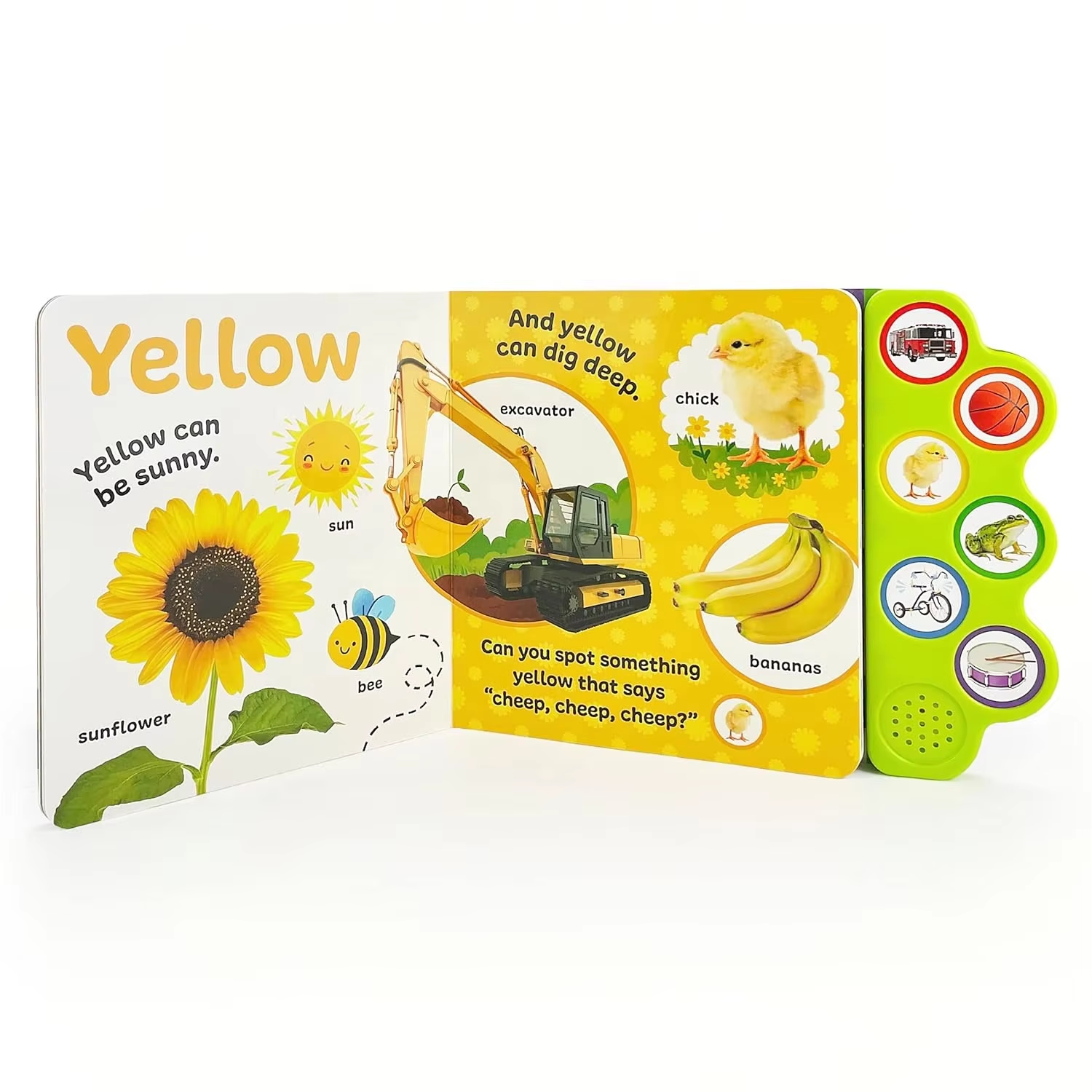
Supporting Early Cognitive Development Through Interactive Engagement
Understanding Interactive Point-and-Read Picture Book Features and Cognitive Benefits
Picture books that let kids point and read come with all sorts of cool features like textures to touch, sounds to hear, and pictures that pop out. These different elements work together in the brain at once, which helps kids process information better. Studies found that little ones who use these interactive books remember words paired with objects about 28% better than when they just look at regular books (a study from Frontiers in Education back in 2021). When books have buttons that play sounds and stories with colorful illustrations, it actually helps build memory skills, especially for three to five year olds. Take for example when a child runs their fingers along a bumpy road on the page while listening to words like slide or bounce. This kind of hands-on experience really sticks in their minds because they're connecting words with what they feel and hear all at once.
Active vs. Interactive Reading: Impact on Memory Retention and Learning
| Reading Style | Retention Rate (48hrs) | Word Acquisition (6 weeks) |
|---|---|---|
| Passive (Adult reads) | 34% | 11 new words |
| Active (Child points) | 47% | 18 new words |
| Interactive (Multi-sensory engagement) | 63% | 27 new words |
Interactive reading outperforms passive and active methods by leveraging the testing effect–children who physically engage with story elements retain 19% more narrative details than peers in non-interactive settings (Roskos et al., 2023). This hands-on involvement strengthens memory encoding and promotes deeper comprehension.
Building Narrative Skills Through Visual Prompts and Verbal Interaction
When kids see characters showing emotions or notice changes between scenes, they tend to come up with 2 to 3 times more complicated sentences while telling stories. Research from 2022 showed that little ones who used interactive books together with their parents came out with about 42% more complete sentences like "The bear climbs the tree" compared to kids with regular books. Asking questions like "What do you think happens next?" along with books that have moving parts really helps build those important sequencing skills that lay the groundwork for understanding what they read later on.
Print Awareness and Phonological Development: Long-Term Literacy Outcomes
Kids who get hands-on time with interactive books tend to pick up letter recognition about 22% quicker and show around 17% better phoneme segmentation skills by the time they reach first grade according to Neumann's research from last year. When children trace letters with their fingers on textured pages, it helps them connect shapes with sounds more effectively. Audio elements that follow a beat pattern, such as buttons that play rhymes when pressed, really boost their understanding of syllables too. Looking at long term results, those early improvements translate into roughly a 12 point edge in reading ability all the way through middle school years later.
Empirical Evidence Linking Engagement to Early Literacy Gains
Research from the Harvard Center on the Developing Child shows pretty clearly that when kids under four get involved in interactive reading sessions regularly, it actually helps build stronger connections in parts of their brains responsible for processing language. Looking at data collected over three years, researchers found something interesting: toddlers who spent time each day with these interactive books ended up performing about 31 percent better on vocabulary tests compared to those sticking with regular picture books. And here's another angle worth noting – kids growing up in homes where there wasn't much exposure to reading managed to bridge around two thirds of the so-called "word gap" simply by taking part consistently in these interactive reading activities. That's impressive progress considering their starting point.
Dialogic Reading as a Core Mechanism in Interactive Point-and-Read Picture Books
Key components of dialogic reading in everyday use
When parents use dialogic reading, they turn regular storytime into something much more engaging through what's called the PEER approach - Prompt, Evaluate, Expand, Repeat. The idea is simple but powerful. A caregiver might ask questions like What do you think this character is feeling? Then they listen to the answer, build on it with better vocabulary (like Yes, I see that the bear seems really frustrated), and keep coming back to important points so kids remember them. Research has found that this kind of interaction actually makes changes in how the brain works for language. Some scans done at Cincinnati Children's Hospital showed pretty interesting results too. Kids who had dialogic reading sessions showed about 23 percent more activity in certain parts of their brains compared to when they just listened passively. Makes sense why so many early childhood experts recommend this method these days.
Promoting child participation through open-ended questioning
When asking kids open-ended questions like What do you think happens next? or How would you fix this issue?, we tend to get longer answers from them. Recent research back in 2023 looked at this phenomenon across multiple studies and found something interesting. Kids who had these kinds of discussions while reading actually constructed about 38 percent more complicated sentences compared to their peers in regular reading sessions. The method works similarly to what experts call serve and return interactions, which play a really important role in how brains develop properly over time.
Applying dialogic techniques across home, classroom, and therapy settings
Teachers often incorporate tactile elements into storybooks for kids who struggle with speech development. These might include questions like "Feel the rain cloud - what noise does falling rain create?" Some therapists work on emotional recognition too, asking children to identify feelings through activities such as "Show me the smiling face." According to research published last year in the Journal of Child Language, when parents follow dialogic reading techniques, children tend to speak up about 2.7 times more frequently during story time. This approach seems to work well regardless of where families live or what background they come from.
Case study: Consistent dialogic reading and toddler vocabulary growth
Over the course of two years, scientists followed toddlers who spent time each day doing dialogic reading with those fancy interactive picture books. Kids in this group ended up knowing about 40 percent more expressive words by the time they turned three than kids who didn't participate, and teachers noticed these advantages continuing into their preschool years. The research team thinks this happens because of something they call a cognitive loop where little ones get hands-on with parts of the story while talking about what's happening, which helps build both vocabulary and deeper comprehension skills at the same time.
Strengthening Child-Adult Interaction and Responsive Learning Behaviors
The role of responsive interactions in early childhood development
Picture books where kids can point and read together actually help build those important brain connections needed for both language development and emotional growth. According to research published by Brookes Publishing last year, kids who had parents actively engage while reading showed about 73 percent better social skills compared to those just sitting there listening passively. When grown-ups stop occasionally during story time to ask questions like What happens next? or pay attention when little ones point at something interesting in the book, this kind of back and forth really helps them learn how conversations work. It also teaches them about emotions without even realizing it because they're getting immediate feedback from their caregiver's responses.
Scaffolding learning through adult-guided exploration in shared reading
Effective scaffolding follows a “serve-and-return” model:
- Adults introduce vocabulary using character voices
- Children respond by turning pages or activating sounds
- Adults expand responses (“Yes, that’s a firetruck! It’s red like your shoes”)
This technique improves concept retention by 41% compared to passive narration by helping children connect book content to real-life experiences (Brookes Publishing).
Deepening emotional bonds through consistent interactive reading routines
A 2024 study of 500 parent-child dyads found families practicing daily interactive reading reported:
- 80% stronger emotional reciprocity
- Three times more child-initiated conversations
- 62% lower caregiver stress during learning activities
These shared moments create positive associative memories, linking literacy with safety, enjoyment, and connection.
How joint attention supports sustained engagement from infancy onward
Interactive books promote joint attention–a core developmental milestone emerging around 6 months. When caregivers tap images while naming objects (“See the green frog?”), they help infants develop:
- Vocabulary mapping (linking spoken words to visuals)
- Turn-taking norms via anticipatory pauses
- Sustained focus (+22% per NEPSY-II assessments)
This interplay of biological readiness and social engagement explains why children exposed to interactive reading before age 3 enter kindergarten with 19% larger expressive vocabularies.
Fostering Social-Emotional Learning and World Knowledge Development
Teaching empathy and self-regulation through character-based emotional cues
When kids look at pictures of characters showing different faces and body postures - like when someone's hands are all balled up because they're frustrated or their mouth is stretched wide in happiness - it helps them learn what those feelings actually mean. Research from last year showed something interesting too. Kids who played with storybooks that focused on emotions had about 28 percent better ability to relate to others during playtime compared to kids who just listened to stories normally. Parents wanting to help their little ones get even better at this stuff might try pointing out specific moments in stories and asking questions like "What makes Max so happy right now?" This kind of back and forth conversation gets children thinking about why people feel certain ways and what happens next because of those feelings.
Evidence from shared reading interventions on socio-emotional growth
Children in dialogic reading programs gain 19% more emotional vocabulary by age 5 than peers in traditional storytime. Successful interventions combine:
- Emotional mirroring: “How would YOU feel if this happened?”
- Consequence exploration: “What could Luna do next to feel better?”
- Real-world connections: “When did you feel proud like this firefighter?”
These strategies build emotional intelligence and self-regulation within meaningful contexts.
Expanding world knowledge through thematic repetition and contextual learning
Repeated exposure to themed books–such as farm stories–helps toddlers form rich conceptual networks:
| Book Element | Real-World Knowledge |
|---|---|
| Tractor illustrations | Agricultural tools |
| Animal sound buttons | Species identification |
| Harvest counting games | Crop growth cycles |
This layered, repeated learning fosters 37% stronger content retention than single-exposure methods, according to early literacy research.
Visual-verbal integration: How interactive books build conceptual understanding
Tactile features like “weather wheels” help children grasp abstract concepts–spinning from sun to clouds while hearing explanations of precipitation and evaporation. Neuroscience research indicates multimodal learning activates 2.3 times more neural pathways than text-only input, leading to durable mental models of complex ideas.
FAQ Section
What are interactive picture books?
Interactive picture books include features like textures, sounds, and pop-up elements that engage multiple senses, enhancing a child's ability to process and remember information.
How do interactive picture books improve memory?
They provide a multi-sensory experience that helps children connect words with tactile, visual, and auditory elements, leading to better retention and understanding.
What is the PEER approach in dialogic reading?
PEER stands for Prompt, Evaluate, Expand, and Repeat. It involves asking questions, listening, building on answers, and reinforcing concepts to enhance language skills.
Why is dialogic reading recommended by experts?
Dialogic reading actively engages the child, promoting language development and brain activity more effectively than passive listening.
How does interactive reading support emotional growth?
By using character-based cues and open-ended questions, children learn to identify and understand emotions, improving their social-emotional intelligence.
Table of Contents
-
Supporting Early Cognitive Development Through Interactive Engagement
- Understanding Interactive Point-and-Read Picture Book Features and Cognitive Benefits
- Active vs. Interactive Reading: Impact on Memory Retention and Learning
- Building Narrative Skills Through Visual Prompts and Verbal Interaction
- Print Awareness and Phonological Development: Long-Term Literacy Outcomes
- Empirical Evidence Linking Engagement to Early Literacy Gains
- Dialogic Reading as a Core Mechanism in Interactive Point-and-Read Picture Books
- Strengthening Child-Adult Interaction and Responsive Learning Behaviors
-
Fostering Social-Emotional Learning and World Knowledge Development
- Teaching empathy and self-regulation through character-based emotional cues
- Evidence from shared reading interventions on socio-emotional growth
- Expanding world knowledge through thematic repetition and contextual learning
- Visual-verbal integration: How interactive books build conceptual understanding
- FAQ Section