
 EN
EN
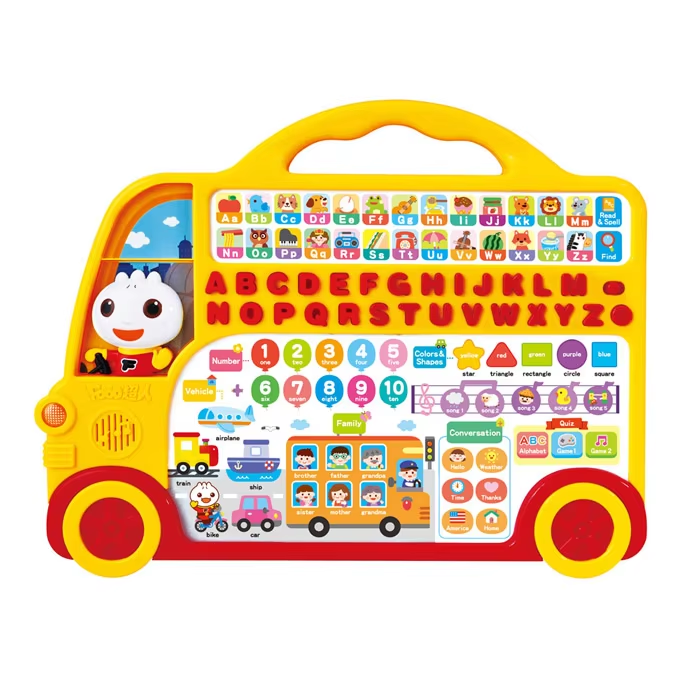
Understanding Child Development Stages and Age-Appropriate Smart Early Learning Toys
Key Developmental Milestones in Children Aged 1–8 Years
Children achieve critical cognitive, motor, and emotional milestones at specific ages:
- 1–3 years: Develop object permanence (understanding hidden objects exist) and basic problem-solving skills, such as with nesting cups. Gross motor skills progress from walking to running.
- 4–5 years: Master complex puzzles (24+ pieces), engage in cooperative play, and refine fine motor control for tasks like buttoning clothes or using scissors.
- 6–8 years: Begin thinking abstractly, grasp foundational math concepts, follow multi-step rules in games, and improve emotional regulation to support peer relationships.
Matching Smart Early Learning Toys to Cognitive, Motor, and Emotional Growth
Matching toys to where kids are developmentally makes all the difference. Toddlers really get a lot out of those shape sorters since they help build spatial awareness and improve hand-eye coordination skills. When kids hit preschool age, programmable robots become super useful as they teach basic cause and effect relationships while letting little ones interact physically with technology. Older school kids tend to do best with STEM kits that offer flexibility and grow along with their abilities something like building circuits or putting together modular robot parts works wonders here. Parents should watch out for toys loaded with too much text for young children though. Studies show that when complexity doesn't match what kids can handle, about two thirds stop playing altogether within minutes according to research published by Ponemon back in 2023.
Expert Guidelines for Selecting Developmentally Appropriate Educational Toys
- Prioritize safety certifications (ASTM F963 or EN71)
- Verify curriculum alignment (e.g., counting games supporting early math readiness)
- Choose adjustable difficulty features so toys grow with the child
- Balance screen time with tactile experiences (limit screen-based interaction to ₠30 minutes per day for children under 6)
Risks of Choosing Toys with Mismatched Complexity and Developmental Readiness
Overly advanced toys can frustrate young learners–4-year-olds given robotics kits designed for 8-year-olds showed 42% lower task persistence. Conversely, simplistic toys fail to engage older children: 78% of 7-year-olds abandoned apps targeted at preschoolers during trials. Match toy complexity to a child’s current developmental stage rather than aspirational age.
Core Selection Criteria for Effective and Safe Smart Early Learning Toys
Safety, Durability, and Child Engagement as Foundational Selection Factors
When choosing toys for little ones, safety should definitely come first. Parents need to go for smart early learning options crafted from safe materials such as BPA free plastic or wood that comes from responsible sources. Check those safety marks too - ASTM F963 or EN71 certifications are good indicators. Industry data shows something pretty shocking actually: around three out of four toy related injuries happen because kids get access to stuff that's either too complex or not suitable for their age group (Future Market Insights had this stat in their 2024 report). The build quality counts as well. Look at toys that have been put through rigorous testing and can handle over 500 hours of playtime without falling apart. Toys with lights, sounds, and interactive features tend to grab children's attention much better than plain old static versions. These engaging elements also help develop problem solving skills gradually over time instead of just providing instant gratification.
Evaluating Educational Content Quality and Curriculum Alignment
Smart toys of good quality actually fit into the existing early learning frameworks we see in preschools today, including STEM standards and literacy goals. When shopping around, look for toys made with help from teachers or child development experts, plus ones that let parents track progress over time. Take coding toys for instance they need to build up challenges gradually starting with simple steps all the way through to more complex problem solving that matches how kids naturally think and learn. Some studies have found that when children play with toys designed specifically for learning curriculums, their kindergarten readiness improves about 22 percent better than with regular off-the-shelf toys according to Parent.app research from last year.
Assessing Cognitive Accessibility and Real Learning Outcomes
Toys that work well for kids tend to match how fast each child learns. When games use artificial intelligence to change how hard things get while playing, studies suggest this cuts down on frustration quite a bit, maybe around a third. This keeps little ones engaged without making them feel overwhelmed. Parents should stay away from those toys with only one right answer. Better choices are the kind where kids can do all sorts of things. Take building blocks for instance. Some kids might stack them to practice counting, others might create stories with characters made from different colored pieces. What really matters is whether children can explain what they picked up from playing. If interest drops off after the first few days, it probably wasn't engaging enough beyond just being new and shiny.
Balancing Screen-Based Interaction With Hands-On, Tactile Play
About two thirds of smart toys these days come with screens built right in, but there's something special happening with those hybrid toys that mix digital stuff with actual physical parts. Kids who play with these tend to develop better fine motor skills around 18 percent more than others. When looking at options for little ones, it makes sense to go for interactive setups where the screen actually works together with hands-on play. Take augmented reality chemistry kits as an example they still need real glassware and test tubes to make things work. Just mindlessly swiping on screens tends to shorten attention spans pretty quickly. But when kids manipulate objects and get responses from the system, their concentration lasts almost three times longer according to some studies we've seen.
Supporting STEM and Cognitive Development Through Smart Early Learning Toys
How Smart Early Learning Toys Enhance STEM and Critical Thinking Skills
Early learning toys that incorporate smart technology help turn those tricky STEM ideas into something kids can actually touch and manipulate through real problem solving. Research from 2024 showed some pretty interesting results when looking at preschoolers who played with modular robotics kits versus those in regular playgroups. The kids working with robots saw their spatial reasoning abilities jump by around 27%. These educational toys come with built-in challenges that match what developmental psychologists call the concrete operational stage for ages 7 to 11. For example, programming robots to find their way through mazes teaches logical sequencing without even feeling like work. Tactile coding systems use colorful blocks that snap together to explain algorithms, while science kits let kids test theories through simple experiments they can see and touch. The Early Childhood Tech Education group reports that children exposed to these kinds of activities tend to develop about 33% better understanding of cause and effect relationships by the time they reach 8 years old.
Interactive Technology Toys Like Coding Kits and Robotics for Preschoolers
Modern tech toys emphasize sensorimotor engagement and minimize screen dependency. Examples include:
| Toy Type | Skill Developed | Implementation Example |
|---|---|---|
| Tactile coders | Algorithmic thinking | Magnetic tiles programming light sequences |
| Robotics kits | Systems analysis | Building motorized creatures with simple circuits |
| Augmented reality puzzles | Spatial visualization | Solving 3D geometry challenges via tablet interaction |
These hybrid designs–combining physical manipulation with contextual digital feedback–boost retention by 41% in preschool STEM literacy trials (thestemtent.au/innovative-stem-toys-that-encourage-creativity-and-problem-solving/).
Case Study: AI-Powered Robotics Kits and Problem-Solving Development in 5-Year-Olds
A six-month longitudinal study followed 120 kindergarteners using adaptive robotics kits. Participants demonstrated:
- 35% faster pattern recognition in math assessments
- 22% higher success rates in multi-step puzzles
- 50% increase in iterative experimentation (testing 3+ solutions vs. 1.2 in control group)
The kits’ AI adjusted challenge levels based on error patterns, creating “productive struggle” zones aligned with Vygotsky’s Zone of Proximal Development theory.
Open-Ended Smart Toys That Foster Creativity and Independent Thinking
Unstructured tools like magnetic construction sets or programmable storyboards promote divergent thinking. Unlike prescriptive apps, these toys allow children to:
- Define their own problems (“How do I build a bridge that holds 200g?”)
- Test material properties through trial and error
- Revise designs using cause-effect observations
Children engaging in open-ended play score 29% higher on creativity indices (Torrance Tests, 2023), demonstrating that structured freedom optimizes cognitive growth.
Personalized Learning: The Role of Artificial Intelligence in Smart Early Learning Toys
AI-Driven Personalization of Learning Paths in Smart Early Learning Toys
Toys powered by artificial intelligence track more than 150 different behaviors as kids play, creating personalized learning experiences that change based on what each child needs. These smart toys work with special algorithms much like what was described in last year's Adaptive Play Report from researchers at Stanford. The technology spots where kids might be struggling and then provides just enough help to keep them moving forward without giving away answers. Some interesting findings came out of a study published in the International Journal of Child Computer Interaction back in 2021. Researchers noticed that children who played with these AI enhanced toys developed their problem solving abilities about 34 percent quicker compared to kids playing with regular toys. This kind of progress makes sense when we think about how engaged children stay with interactive experiences tailored specifically for their skill level.
| Feature | Traditional Toys | AI-Enhanced Toys |
|---|---|---|
| Content Adjustment | Fixed difficulty | Real-time optimization |
| Progress Tracking | Parent observation | Automated analytics |
| Engagement Strategy | Repetitive play patterns | Dynamic activity rotation |
Adaptive Feedback Systems That Respond to a Child’s Progress
Smart toys these days give kids instant feedback when they need it most, using voices and lights to guide them along. Some really clever ones actually spot when a child is getting frustrated and then step in with encouragement techniques that work pretty well. According to some research from Child Development Institute back in 2023, about 78 out of 100 five to six year olds kept trying harder after receiving this kind of support. The top models on the market today come equipped with all sorts of sensors that can tell what's going on in a child's mind and how they're feeling while playing around with these gadgets.
Data Privacy and Security Concerns in Connected Smart Toys
Despite benefits, 63% of parents express concern about data collection in connected toys (Family Online Safety Institute, 2023). Trusted manufacturers address these risks through:
- COPPA-compliant data practices
- End-to-end encryption for all child-generated information
- Parental dashboards with granular consent controls
Always confirm third-party security certification, such as kidSAFE+. Advances in federated learning now enable personalized AI experiences without storing sensitive data on centralized servers.
FAQ
What are the critical developmental stages for children aged 1–8?
Children aged 1–8 achieve essential cognitive, motor, and emotional milestones at specific ages. At 1–3 years, they develop object permanence and basic problem-solving skills. At 4–5 years, they master complex puzzles and engage in cooperative play, refining fine motor skills. From 6–8 years, children begin thinking abstractly, grasp foundational math concepts, and improve emotional regulation.
Why is it important to match toys with children's developmental stages?
Matching toys with children's developmental stages is crucial for effective learning and engagement. Toys suited to children's abilities support cognitive, motor, and emotional growth, while mismatched toys can cause frustration or disinterest.
What features should parents look for when selecting educational toys?
Parents should prioritize safety certifications, curriculum alignment, and adjustable difficulty features in educational toys. It's also important to balance screen time with tactile experiences.
How do smart early learning toys support STEM and cognitive development?
Smart early learning toys enhance STEM and cognitive development through tactile interaction and challenges that match children's developmental stages. These toys boost skills in spatial reasoning, logical sequencing, and problem-solving.
What role does AI play in smart early learning toys?
AI in smart early learning toys tracks children's behaviors, creating personalized learning paths and adaptive feedback systems. These toys optimize the learning experience by adjusting content difficulty and engagement strategies, increasing cognitive growth.
Table of Contents
- Understanding Child Development Stages and Age-Appropriate Smart Early Learning Toys
- Core Selection Criteria for Effective and Safe Smart Early Learning Toys
-
Supporting STEM and Cognitive Development Through Smart Early Learning Toys
- How Smart Early Learning Toys Enhance STEM and Critical Thinking Skills
- Interactive Technology Toys Like Coding Kits and Robotics for Preschoolers
- Case Study: AI-Powered Robotics Kits and Problem-Solving Development in 5-Year-Olds
- Open-Ended Smart Toys That Foster Creativity and Independent Thinking
- Personalized Learning: The Role of Artificial Intelligence in Smart Early Learning Toys