 EN
EN
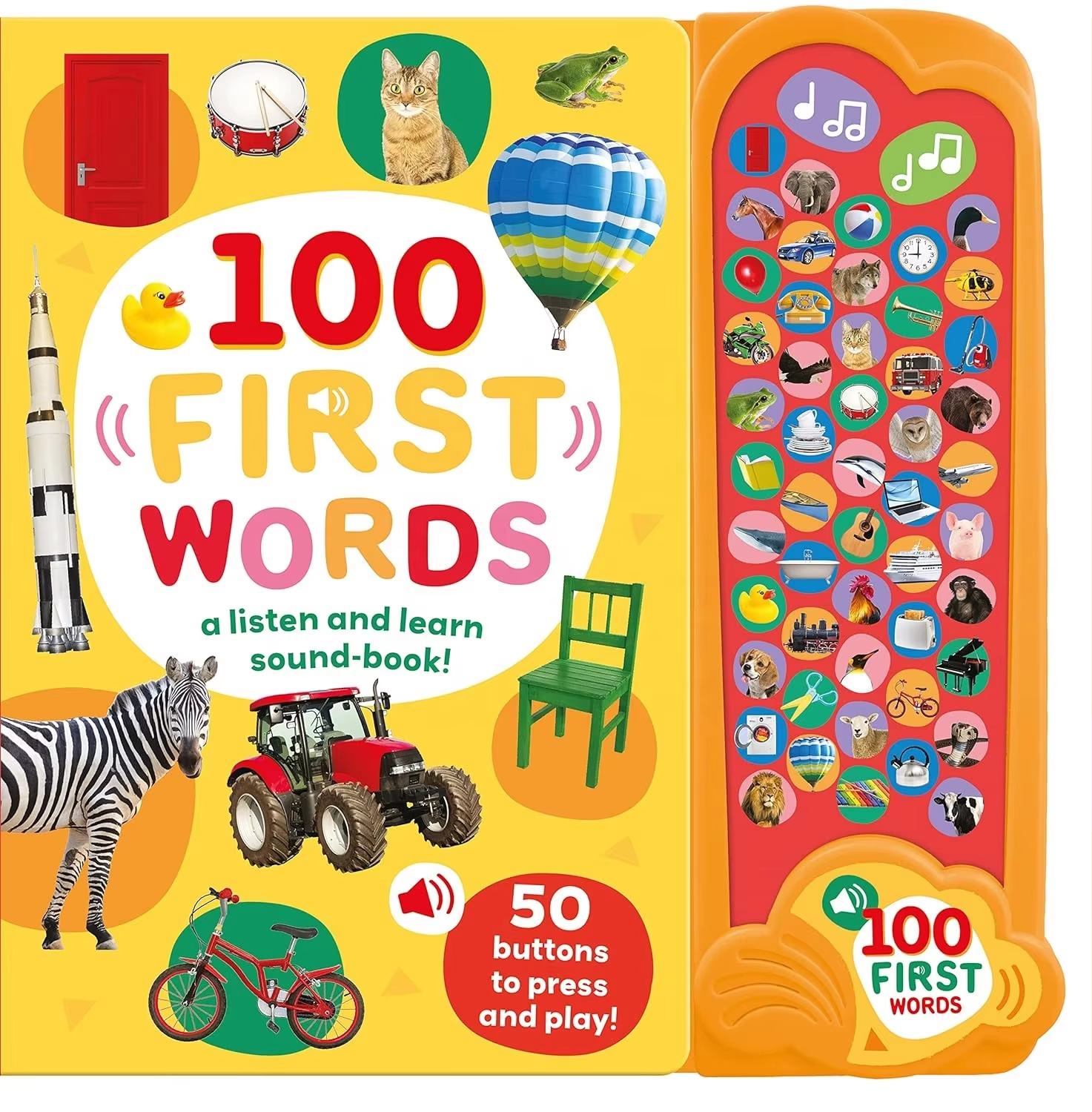
How Interactive Point-and-Read Picture Books Build Early Literacy Foundations
Interactive point-and-read picture books uniquely activate neural pathways critical for literacy. By transforming passive viewing into tactile exploration, they forge connections between symbols, sounds, and meaning.
Neural activation: Tactile pointing strengthens print awareness and letter recognition pathways
Toddlers who point at letters while learning actually activate two parts of their brain at once: the visual word form area and the motor cortex. This kind of dual engagement helps build what experts call "print awareness," which basically means kids start to understand that those squiggles on paper stand for real words. A recent study found something pretty interesting too. Kids who used interactive books showed about 28 percent better letter recognition compared to those with regular books, according to research published in Early Childhood Research Quarterly last year. And there's another benefit worth mentioning. When little hands go through the motions of pointing, those abstract letter shapes get locked into spatial memory. Think of it like mental sticky notes that help children remember letters faster and begin decoding words sooner.
Dual-coding in practice: Synchronizing sight, sound, and touch for deeper encoding
These books operationalize dual-coding theory by integrating three sensory channels:
- Visual: Bright, intentional illustrations clarify word-picture relationships
- Auditory: Voice prompts model accurate pronunciation, rhythm, and intonation
- Tactile: Texture-triggered sounds provide cause-effect reinforcement
This multisensory alignment accelerates phonological awareness—the ability to identify and manipulate speech sounds—by 40% compared to traditional reading (Early Literacy Consortium, 2023). Each point-and-touch interaction generates overlapping memory traces, making vocabulary acquisition more resilient and retrieval more efficient.
Why Interactive Point-and-Read Picture Books Boost Toddler Engagement and Attention
Design-driven focus: Flaps, textures, and voice-triggered responses counter short attention spans
Little kids have notoriously short attention spans, but clever book designs actually help stretch those moments out. Books with flaps to lift create a sense of adventure as children discover what's hidden underneath. Different materials on pages - sometimes smooth, sometimes bumpy or even fuzzy - let toddlers explore with their hands in ways regular books just can't offer. And when they press something and hear a sound come right back at them, it teaches them about cause and effect while keeping them engaged. Studies from Early Childhood Research Quarterly in 2023 found that this kind of instant response keeps young minds focused for around 30 to 50 percent longer compared to normal storybooks. What we get then isn't just someone sitting there watching pages turn, but active little explorers who build their concentration skills one page at a time.
Joint attention amplified: Sensory-motor coupling deepens shared reading experiences
Interactive books help build strong connections between what kids see, hear, and touch, which makes those special bonding moments between parents and little ones even better. Imagine when a toddler sticks their finger at a fuzzy picture of a sheep and says "baaa!" as mom or dad points it out and tells them all about sheep. All these senses working together at once creates something pretty amazing. Studies show that this kind of back and forth during story time leads to about 40% more talking between parent and child compared to regular book reading according to research from the Early Literacy Consortium last year. Pressing buttons, opening flaps, and other hands-on stuff turns into fun routines where parents naturally start describing things, showing emotions, and giving praise. These physical interactions keep children engaged longer and actually help lay the foundation for important social skills like taking turns and having real conversations later on.
How Interactive Point-and-Read Picture Books Advance Language and Vocabulary Growth
Dialogic scaffolding: 'Point to the cow' prompts prediction, naming, and comprehension before speech
Interactive books act like little language labs for kids. When a book asks something simple like "Where's the cow?" it gets toddlers thinking and talking in ways that help them learn. They start predicting what comes next, learning names for things they see, and understanding concepts before they actually speak out loud. The combination of touching pages while hearing words seems to boost how brains handle both speaking and listening skills. Research from the Early Literacy Consortium back in 2023 found that kids who regularly use these interactive books tend to know about 2.3 months worth of extra vocabulary compared to other kids their age, plus they score around 18% better on tests measuring how well they understand spoken language. And there's something really important about the act of pointing itself. It gives young children a safe way to show they understand without having to form complete sentences right away, which builds their confidence and lays down the groundwork for when they're ready to talk more.
Evidence-aligned features: Alignment with NAEYC dialogic reading benchmarks and AAP early language guidelines
Well-designed interactive point-and-read books actually follow what works according to educational research. These books hit those important NAEYC standards for dialogic reading because they include questions throughout and have features that prompt kids to respond, creating that valuable back and forth interaction. The American Academy of Pediatrics would approve too since these books make it easy for parents and children to engage in serve-and-return conversations. When kids press buttons and hear sounds while seeing pictures at the same time, they stay focused on all those rich language experiences. Studies from the Early Literacy Consortium show kids using these books learn words about 40% faster each month compared to traditional methods. Plus none of this relies on screens keeping little ones distracted.
The Dual Benefit: Fine Motor Development and Parent-Child Bonding Through Interactive Point-and-Read Picture Books
Point and read picture books offer two big benefits for kids growing up: they help develop those tiny hand movements needed for writing later on, plus they bring parents and children closer together during story time. When little ones lift flaps, press buttons that make noise, or feel different textures on the pages, they're practicing important skills like using their fingers properly and coordinating what they see with what they do. At the same time, reading these interactive books creates special moments between adults and toddlers. Parents can talk about what's happening in the story, ask questions, or follow along with whatever catches a child's eye. These back and forth interactions build strong bonds that research shows helps kids manage emotions better and feel safe in relationships. What makes these books so effective is how they turn reading into something active rather than just sitting there looking at pictures. The combination of touching things, focusing together on the same content, and responding warmly to each other actually supports both physical growth and healthy social development in young children.
FAQ
What is the primary benefit of using interactive point-and-read picture books?
Interactive point-and-read picture books enhance early literacy skills by forging connections between symbols, sounds, and meanings through tactile exploration.
How do these books aid in language development?
They act like language labs, prompting toddlers to predict, name, and comprehend concepts. They help boost both speaking and listening skills, leading to better vocabulary acquisition.
Do interactive books improve attention spans in toddlers?
Yes, their engaging design with flaps and textures helps toddlers focus longer than with traditional books.
Table of Contents
- How Interactive Point-and-Read Picture Books Build Early Literacy Foundations
- Why Interactive Point-and-Read Picture Books Boost Toddler Engagement and Attention
- How Interactive Point-and-Read Picture Books Advance Language and Vocabulary Growth
- The Dual Benefit: Fine Motor Development and Parent-Child Bonding Through Interactive Point-and-Read Picture Books
- FAQ